Creative Play · Ages 1–4 · Quiet Time
Toddler colouring pages are one of the simplest, calmest activities you can offer — and one of the most underrated. Far from 'just colouring,' a good colouring session builds focus, fine motor skills, and creativity. Here's why colouring is so good for toddlers, plus playful ways to get more from every page.
Why colouring is genuinely good for toddlers
Colouring quietly builds a surprising number of skills. Holding and controlling a crayon develops the hand strength behind later writing. Choosing colours and filling a space builds focus and decision-making. And the calm, repetitive motion is genuinely soothing for a busy toddler.
It's also wonderfully open-ended. There's no wrong way to colour a lion purple, and that freedom builds creative confidence. With animal and nature pages, colouring also becomes a springboard for language — talking about the creatures, where they live, and the sounds they make.
Free printable download
Get the Free Ultimate Toddler Starter Pack
A short guide on how toddlers actually learn through play, plus colouring pages, tracing sheets and matching games, a no-prep activity menu, a weekly planner, and a bonus “I did it!” progress chart — all free.
Download the Free Starter Pack →Get the most from each colouring page
A few small tweaks turn a colouring sheet into a richer activity.
01. Talk while you colour
Chat about the animal — what it eats, where it lives, the noise it makes. Colouring becomes a language-rich conversation.
02. Offer different tools
Swap crayons for chunky pencils, dot markers, or even cotton buds and paint. New tools renew the interest.
03. Colour together
Sit and colour your own page alongside them. Toddlers love the shared, side-by-side activity.
04. Let go of the lines
Scribbling all over the page is developmentally normal and fine. The motion and engagement are what matter, not neatness.
05. Display the finished page
Pop it on the fridge. Seeing their work valued builds pride and motivation.
Turn colouring into a bigger activity
06. Cut and collage
Once coloured, cut the animal out and glue it onto a bigger background scene the toddler creates.
07. Colour-and-match
Print two copies, colour one, and use the other to play a matching or memory game.
08. Story-making
Use the coloured animals as characters and make up a simple story together.
09. Sensory colouring
Try finger-painting, sticker dots, or torn-paper collage on the printable for a multisensory twist.
10. Nature link
After colouring a tree or bird, head outside to find the real thing — colouring becomes nature study.
Not sure printables count as real play?
The free Ultimate Toddler Starter Pack includes a short guide — How Toddlers Actually Learn Through Play — plus a no-prep activity menu that shows you how to turn every printable into hands-on, playful learning.
Get the Free Starter PackWhen colouring helps most
11. Quiet time
A calm, screen-free activity for the stretch between lunch and nap.
12. Waiting moments
A few colouring pages in your bag turn restaurant or appointment waits into peaceful ones.
13. Wind-down before bed
The slow, repetitive motion of colouring helps a toddler settle in the evening.
14. Big-feelings reset
Colouring can be a soothing way to help an overwhelmed toddler regulate and calm down.
How to make colouring time work
1. Choose simple, bold pictures
Toddlers do best with large shapes and clear outlines. Detailed pages are for older children.
2. Keep sessions short
Five to fifteen minutes is plenty. End while your toddler is still enjoying it.
3. Use washable crayons
Washable or chunky toddler crayons save your table and your sanity.
4. Praise the effort
Comment on the colours and the focus, not whether they stayed in the lines.
Frequently asked questions
What age can a toddler start colouring?
Most toddlers begin making marks from around 12–15 months and grow into more purposeful colouring by 2–3 years. Start with chunky crayons and big, simple pictures.
My toddler just scribbles. Is that okay?
Completely. Scribbling is an essential developmental stage that builds the hand control colouring and writing grow from. It's progress, not a problem.
Isn't colouring a bit passive?
Not when it's done well. Talking, choosing colours, and extending the page into crafts or stories makes colouring an active, rich activity — not just busywork.
How many colouring pages should I print?
One or two at a time. A toddler with a single inviting page engages; a toddler with a whole stack feels overwhelmed.
Where can I get the colouring pages?
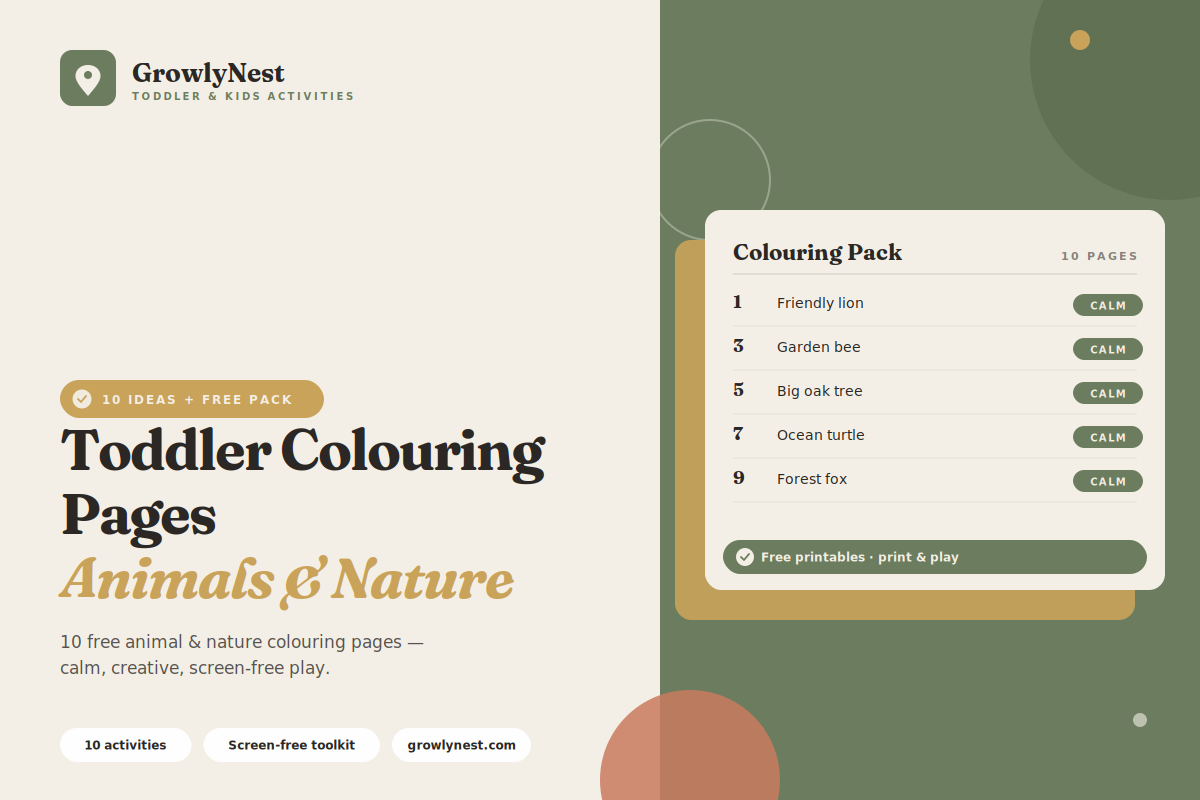
Ten animal and nature colouring pages are included free in the Ultimate Toddler Starter Pack.
The Ultimate Toddler Starter Pack
Playful learning, not a pile of worksheets
Everything in one free download: the “How Toddlers Learn Through Play” guide, colouring pages, tracing sheets and matching games, a no-prep activity menu, a weekly activity planner, and a bonus “I did it!” progress chart.
Download the Free Starter Pack →Free forever · No spam · Unsubscribe any time
From the GrowlyNest family — helping you raise happy, curious, capable toddlers through play.
You're getting — completely free
The Ultimate Toddler Starter Pack
Here's how to get it
It arrives in 1–2 minutes — check your inbox now.
If you don't see the "Gift File" check your Promotions or Spam folder. Drag it to your main inbox so future emails reach you.
Loading Viewer...