
Visual Schedules · Predictability & Calm
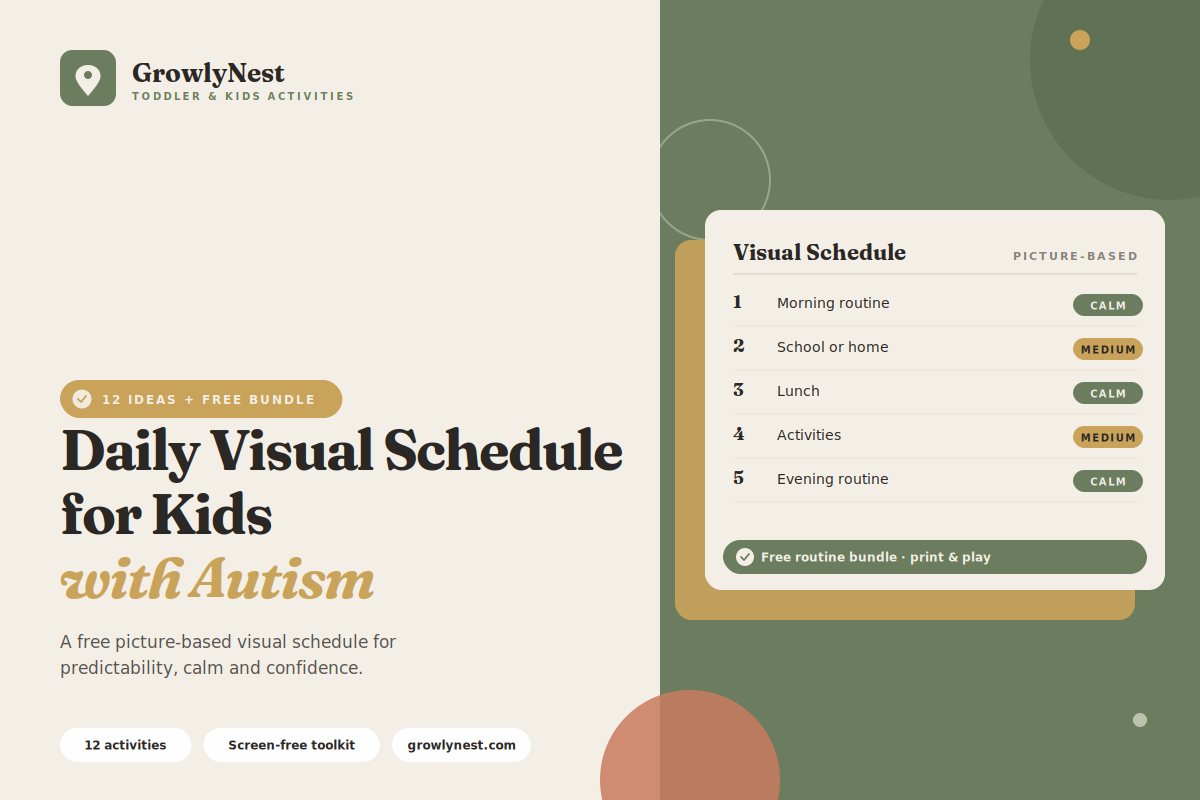
For an autistic child, not knowing what comes next can be genuinely distressing — and a visual schedule is one of the most widely recommended, well-established tools for easing that. A picture-based daily schedule turns an unpredictable day into something a child can see, understand, and feel safe within. Here's how to build and use a visual schedule, with a sample structure you can adapt.
Why visual schedules help autistic children
Many autistic children experience uncertainty as a real source of anxiety, and transitions between activities as especially hard. A visual schedule directly addresses both. By showing the day as a clear sequence of pictures, it makes the abstract concrete and the unknown known — the child can see what is happening now, what comes next, and that the day has a predictable shape. That visibility reduces anxiety, supports smoother transitions, and helps a child feel more in control.
Visual schedules also build independence and communication. A child who can check the schedule themselves relies less on spoken prompts, gains a sense of agency over their day, and has a shared visual reference for talking about what is coming. Every autistic child is different, so a schedule should be tailored to your child — and it works best when developed alongside the professionals and teachers who know them well.
Free routine chart download
Get the Free Complete Kids Routine Chart Bundle
Includes the guide parents really need — how to get kids to actually follow the chart — plus morning, bedtime, after-school and chore charts, a routine builder worksheet to design your routine first, blank customisable versions, pre-reader picture cards, and travel and weekend troubleshooting.
Download the Free Routine Bundle →A sample visual schedule structure
This is a flexible daily structure to adapt to your child. The pictures, level of detail, and number of steps should be matched to your individual child's needs and preferences.
01. Morning routine
A picture sequence for the morning steps — wake, bathroom, dress, breakfast. Breaking the morning into clear, separate images supports a calm, predictable start.
02. Transition to the day's main activity
A clear card for what the day holds — school, therapy, or home. Showing the transition visually, with warning that it is coming, helps reduce the stress of moving between settings.
03. Morning activity block
A picture for the morning's main activity or learning time. Knowing what this block holds helps a child settle into it.
04. Lunch
A clear, consistent lunch card. Anchoring mealtimes visually gives the day reliable, predictable markers.
05. Afternoon activity block
A picture for the afternoon's activity. Where possible, include some choice — a card the child can select — to build agency.
06. Calm or sensory break
A scheduled card for downtime or a sensory break. Building rest into the visible schedule helps a child anticipate and rely on it.
07. Evening routine
A picture sequence for the evening — dinner, bath, wind-down. A predictable evening supports calm and better sleep.
08. Bedtime
A clear final card for bedtime, ideally with its own short picture sequence, so the end of the day is as predictable as the start.
Struggling to get your child to follow the chart?
A chart on the wall is the easy part — getting kids to actually follow it is the real struggle. The free Complete Kids Routine Chart Bundle includes the step-by-step guide for exactly that, plus a routine builder worksheet, ready-made charts, pre-reader picture cards, and troubleshooting for travel and weekends.
Get the Free Routine BundleHow to use a visual schedule effectively
How the schedule is used matters as much as the schedule itself. These approaches help it genuinely support your child.
09. Work with your child's team
Develop the schedule alongside the therapists, teachers, and specialists who know your child. They can help tailor the format, detail, and pictures to your child's specific needs.
10. Make transitions visible
Use the schedule to signal changes before they happen — show and talk through the next card in advance. Forewarning is one of the most valuable things a visual schedule offers.
11. Keep it consistent and accessible
Use the schedule the same way every day, and keep it somewhere the child can always see and reach. Some children benefit from moving a completed card to a "finished" pocket.
12. Build in choice and flexibility
Where you can, include cards the child can choose between, and a clear way to show when something unexpected changes. This builds agency and helps your child cope with the inevitable changes to any plan.
Tips for visual schedules that work
1. Match the format to your child
Some children do best with photographs, others with simple symbols or drawings. Use whatever your child connects with most clearly, and adjust as you learn.
2. Start small and build
Begin with a short part of the day — just the morning, perhaps — and extend the schedule as your child grows comfortable with it.
3. Prepare for changes gently
When the day's plan changes, show it on the schedule and talk it through calmly in advance wherever possible. A visible "change" card can help.
4. Keep professionals involved
Stay in close contact with your child's teachers and therapists so the schedule stays consistent across home and other settings, and evolves with your child.
Frequently asked questions
What is a visual schedule?
A visual schedule is a picture-based representation of a child's day, showing activities as a clear sequence of images. It makes the day predictable and is a widely recommended support for autistic children and children with additional needs.
How do visual schedules help children with autism?
They reduce the anxiety that comes from uncertainty, support smoother transitions between activities, build independence, and give a child a clear, shared way to understand and anticipate their day.
What age can a child use a visual schedule?
Visual schedules can support children across a wide age range. The format and detail should be matched to the individual child rather than their age — your child's team can help you pitch it right.
Should I create the schedule alone?
It's best developed with the professionals who know your child — therapists, teachers, and specialists. They can help tailor it to your child's specific needs, and keep it consistent across home and school.
What if the day doesn't go to plan?
Changes happen, and the schedule can help here too. Show the change on the schedule, use a "change" card if it helps, and talk it through calmly in advance where possible. Building in some flexibility helps your child cope with the unexpected.
The Complete Kids Routine Chart Bundle
A routine that actually sticks
Everything in one free download: the guide to getting kids to actually follow the chart, morning, bedtime, after-school and chore charts, a routine builder worksheet to design your routine first, blank customisable versions, pre-reader picture cards, and troubleshooting for travel and weekends.
Download the Free Routine Bundle →Free forever · No spam · Unsubscribe any time
From the GrowlyNest family — helping you build calm, predictable routines your children genuinely follow.
You're getting — completely free
The Complete Kids Routine Chart Bundle
Here's how to get it
It arrives in 1–2 minutes — check your inbox now.
If you don't see the "Gift File" check your Promotions or Spam folder. Drag it to your main inbox so future emails reach you.
Loading Viewer...