
Nap Time · Ages 1–3 · Restful Days
Nap time can be a daily flashpoint — the resisting, the stalling, the "I'm not tired" from an obviously tired toddler. A nap time routine chart makes the wind-down to rest predictable and calm, so naps become a smoother, more reliable part of the day. Here's a complete nap routine you can copy, plus how to get your toddler to settle to it.
Why a nap routine chart helps
Just like bedtime, nap time goes far better with a consistent, predictable wind-down. A toddler can't switch from active play to sleep in an instant — they need a clear sequence of calming steps that signals rest is coming. A nap routine chart makes that wind-down visible: the same few steps, in the same order, every day, gently moving a toddler from busy to calm and preparing their body for sleep.
A chart also reduces the nap-time resistance and negotiation. When the steps to rest are set out visually, nap time stops being a thing you announce and your toddler argues over — the chart leads the way. A reliable nap protects your toddler's mood, behaviour, and night sleep, and protects you a much-needed break. The strategies below help the chart genuinely work.
Free routine chart download
Get the Free Complete Kids Routine Chart Bundle
Includes the guide parents really need — how to get kids to actually follow the chart — plus morning, bedtime, after-school and chore charts, a routine builder worksheet to design your routine first, blank customisable versions, pre-reader picture cards, and travel and weekend troubleshooting.
Download the Free Routine Bundle →A sample nap time routine
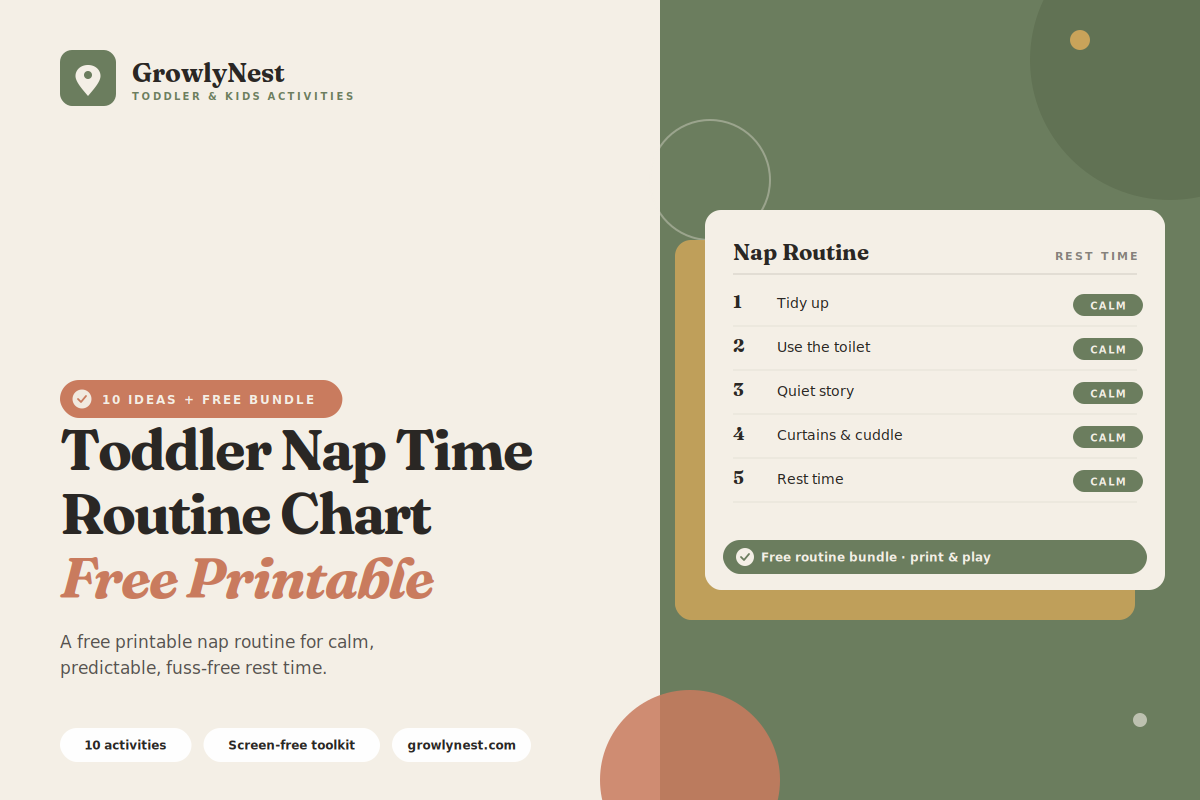
Here is a calm, copyable wind-down to rest. Keep the same order every day — consistency is what makes nap time predictable.
01. Tidy-up time
A quick tidy of the toys together signals that play time is ending. Making it the first step gives a gentle, clear start to the wind-down.
02. Use the toilet or change nappy
A toilet trip or nappy change so your toddler is comfortable for rest. Including it in the routine prevents it becoming a stalling tactic later.
03. A calm, quiet activity
A few minutes of something calm — a simple puzzle, looking at a book — to bridge from active play to rest. This step lowers the energy gently.
04. A quiet story
One short, calm story snuggled together. Reading is soothing and connecting, and a single story keeps the wind-down from dragging out.
05. Curtains, comfort object, and cuddle
Draw the curtains, settle the comfort object, and share a calm cuddle. These consistent cues tell your toddler's body that sleep is here.
06. Into bed for rest time
Settle your toddler into bed with a consistent goodnight phrase. Ending the routine the same way every day gives a clear, secure signal that it's time to rest.
Struggling to get your child to follow the chart?
A chart on the wall is the easy part — getting kids to actually follow it is the real struggle. The free Complete Kids Routine Chart Bundle includes the step-by-step guide for exactly that, plus a routine builder worksheet, ready-made charts, pre-reader picture cards, and troubleshooting for travel and weekends.
Get the Free Routine BundleHow to get your toddler to settle for naps
A nap chart only smooths rest time if your toddler genuinely follows it. These strategies help.
07. Watch for the nap window
Start the routine when your toddler shows early tired signs, before they become overtired. An overtired toddler fights sleep far harder, so timing the wind-down well is key.
08. Keep the routine consistent and calm
Use the same steps in the same order each day, at a calm, unhurried pace. Consistency is what trains your toddler's body to expect and accept rest.
09. Let the chart lead the wind-down
Refer to the chart together — "what's next on our nap chart?" — rather than announcing and negotiating. The chart becomes the gentle authority that leads to rest.
10. Offer quiet time if sleep won't come
If your toddler genuinely won't sleep, keep the expectation of calm, restful quiet time in bed. The rest and the predictable routine are still valuable even on a no-sleep day.
Tips for smoother nap times
1. Keep nap time consistent each day
A nap at roughly the same time daily helps regulate your toddler's body clock and makes settling far easier over time.
2. Set a calm sleep environment
A dark, quiet, comfortable room supports the routine in signalling rest. Dim the light and lower the noise as the wind-down begins.
3. Don't drop the nap too early
Many toddlers still need a nap well into the toddler years. Watch your child's tiredness and behaviour rather than rushing to drop the nap.
4. Transition gently to quiet time
When your toddler does outgrow the nap, keep a calm quiet-time routine in its place. The midday rest and downtime still benefit everyone.
Frequently asked questions
What age can a toddler use a nap routine chart?
A simple picture-based nap routine chart works well from around 18 months to 2 years, helping toddlers learn the predictable steps that lead to rest.
My toddler fights every nap. What helps?
Watch for the nap window and start the routine before they're overtired, keep the wind-down consistent and calm, and let the chart lead rather than announcing nap time. An overtired toddler resists sleep far more, so timing matters a great deal.
What if my toddler won't sleep but still seems tired?
Keep the expectation of calm, restful quiet time in bed even if sleep doesn't come. The rest, the downtime, and the predictable routine still benefit your toddler — and sleep often follows on other days.
How long should a nap routine take?
A nap wind-down is usually shorter than bedtime — around 15 to 20 minutes from tidy-up to settling. Keeping it calm and consistent matters more than the exact length.
When should a toddler drop their nap?
It varies — many toddlers need a nap well into the toddler years and some beyond. Follow your child's tiredness and behaviour rather than a set age, and replace a dropped nap with calm quiet time.
The Complete Kids Routine Chart Bundle
A routine that actually sticks
Everything in one free download: the guide to getting kids to actually follow the chart, morning, bedtime, after-school and chore charts, a routine builder worksheet to design your routine first, blank customisable versions, pre-reader picture cards, and troubleshooting for travel and weekends.
Download the Free Routine Bundle →Free forever · No spam · Unsubscribe any time
From the GrowlyNest family — helping you build calm, predictable routines your children genuinely follow.
You're getting — completely free
The Complete Kids Routine Chart Bundle
Here's how to get it
It arrives in 1–2 minutes — check your inbox now.
If you don't see the "Gift File" check your Promotions or Spam folder. Drag it to your main inbox so future emails reach you.
Loading Viewer...