
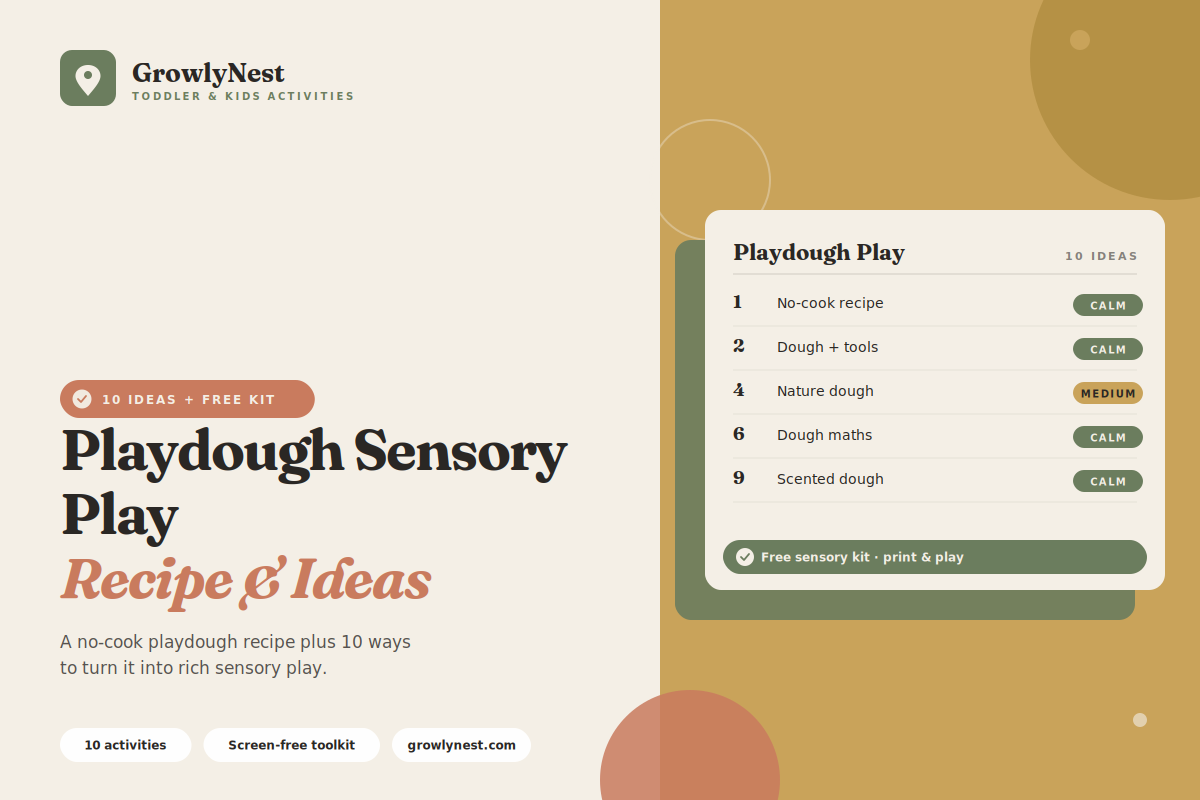
Playdough · Ages 1–4 · Recipe & Play
Playdough is the quiet hero of the toddler years — calming, endlessly open-ended, and brilliant for building strong little hands. And homemade playdough is better than shop-bought: softer, cheaper, and free of worry about what's in it. Here's a foolproof DIY playdough recipe, plus 10 playdough sensory play ideas to go far beyond squishing.
Why playdough is so good for toddlers
Playdough is one of the most valuable materials a toddler can have. Squeezing, rolling, pinching, and pulling builds the hand and finger strength that later powers holding a pencil, using scissors, and doing up buttons. It's open-ended, so it grows with your child — from simple squishing at one to elaborate small worlds at four — and it sparks creativity and imaginative play every time.
It's also a genuine tool for calm. The repetitive, resistant, full-hand action of working dough is regulating: it helps an overstimulated toddler settle and gives big feelings a safe physical outlet. Homemade dough makes all of this better — it's softer than shop-bought, costs pennies, and you know exactly what's in it.
Free sensory play download
Get the Free Sensory Play Starter Kit
A real parent guide that tackles the mess head-on, 20 sensory bin recipe cards with low / medium / full mess ratings, a “sensory play from what’s in your cupboard” finder, troubleshooting for fussy and mess-averse toddlers, taste-safe recipes for the youngest, and a seasonal sensory planner.
Download the Free Sensory Kit →The best no-cook playdough recipe
This no-cook recipe takes five minutes and makes soft dough that lasts for weeks. Mix 2 cups plain flour, half a cup of salt, and 2 tablespoons of cream of tartar in a bowl. Stir in 2 tablespoons of oil and roughly 1.5 cups of just-boiled water (an adult job), adding the water gradually. Stir, then knead on a floured surface until smooth — knead in food colouring at this stage. Store it in an airtight container or zip bag.
01. Basic dough exploration
Simply offer the fresh dough and let your toddler squeeze, poke, flatten, and pull. This free exploration builds hand strength and is calming all on its own.
02. Dough with tools
Add a rolling pin, cutters, a plastic knife, and a garlic press. Rolling, cutting, and squeezing dough through the press is a serious fine motor workout.
Worried about the mess?
Mess is the number one reason parents skip sensory play. The free Sensory Play Starter Kit tackles it head-on — with 20 sensory bin recipe cards rated low, medium, or full mess, and real troubleshooting for “my child eats everything” and “my child hates getting messy.”
Get the Free Sensory KitPlaydough sensory play ideas
03. Nature playdough
Take dough outside or add sticks, leaves, conkers, and petals indoors. Pressing natural treasures into dough makes patterns and combines two kinds of sensory play.
04. Scented playdough
Knead in cinnamon, vanilla, peppermint, or citrus zest for a scent dimension. A calming, multisensory twist on ordinary dough.
05. Playdough maths
Roll dough into balls to count, snakes to measure, and shapes to name. Hands-on early maths wrapped in sensory play.
06. Playdough letters and names
Roll snakes and form letters, numbers, and your toddler's own name. Building a letter makes its shape genuinely memorable.
07. Squish and stamp
Press cookie cutters, textured objects, toy animal feet, and bottle lids into flattened dough to make prints and patterns.
08. Playdough invitations to create
Set out dough with themed loose parts — gems and shells, or beads and buttons — and let your toddler invent freely. Open-ended imaginative play.
09. Hide and find in dough
Press small objects, beads, or coins into the dough for your toddler to dig out and discover — fine motor work with a hide-and-seek thrill.
10. Dough small worlds
Use dough as a base for play — a green "field" for farm animals, a brown "track" for diggers — combining sensory and imaginative play.
How to get the most from playdough
1. Make it together
Toddlers love helping to pour, stir, and knead in colour. Making the dough is a sensory and learning activity in itself — and builds a sense of ownership.
2. Store it properly
Keep playdough in an airtight container or zip bag. Stored well, this recipe stays soft for several weeks; if it dries a little, a few drops of water and a knead revive it.
3. Refresh it with add-ins
The same dough feels new with a different scent, colour, or set of tools. Small changes keep playdough engaging for months.
4. Supervise younger toddlers
Homemade dough is harmless if tasted but salty, so supervise toddlers who still mouth things — or use a taste-safe edible dough recipe for the youngest.
Frequently asked questions
How do I make playdough at home?
Mix 2 cups plain flour, half a cup of salt, and 2 tablespoons cream of tartar; stir in 2 tablespoons oil and about 1.5 cups boiling water; then knead until smooth, adding colour as you go. It takes about five minutes.
Is homemade playdough safe if my toddler tastes it?
It's harmless if a little is tasted, but it's salty and not meant to be eaten, so supervise toddlers who still mouth things. For the youngest, use a taste-safe edible playdough recipe instead.
How long does homemade playdough last?
Stored in an airtight container or zip bag, this recipe stays soft for several weeks. If it dries out, knead in a few drops of water to bring it back.
What skills does playdough build?
Playdough builds hand and finger strength for later writing, fine motor control, creativity, and emotional regulation — and it supports early maths and literacy when you add counting and letter play.
My toddler just squishes the dough and won't 'make' anything. Is that okay?
Completely — squishing is exactly the point at this age. Free exploration builds hand strength and is calming. Making recognisable things comes later; for now, the squishing is the valuable part.
The Sensory Play Starter Kit
Sensory play, minus the mess stress
Everything in one free download: a real parent guide to handling the mess, 20 sensory bin recipe cards with mess-level ratings, a cupboard-finder for instant ideas, troubleshooting for “eats everything” and “hates getting messy,” taste-safe recipes for babies, and a seasonal sensory planner.
Download the Free Sensory Kit →Free forever · No spam · Unsubscribe any time
From the GrowlyNest family — helping you raise curious, confident toddlers through hands-on play.
You're getting — completely free
Free Sensory Play Starter Kit
Here's how to get it
It arrives in 1–2 minutes — check your inbox now.
If you don't see the "Gift File" check your Promotions or Spam folder. Drag it to your main inbox so future emails reach you.
Loading Viewer...