
Movement · Ages 1–4 · Indoor Play
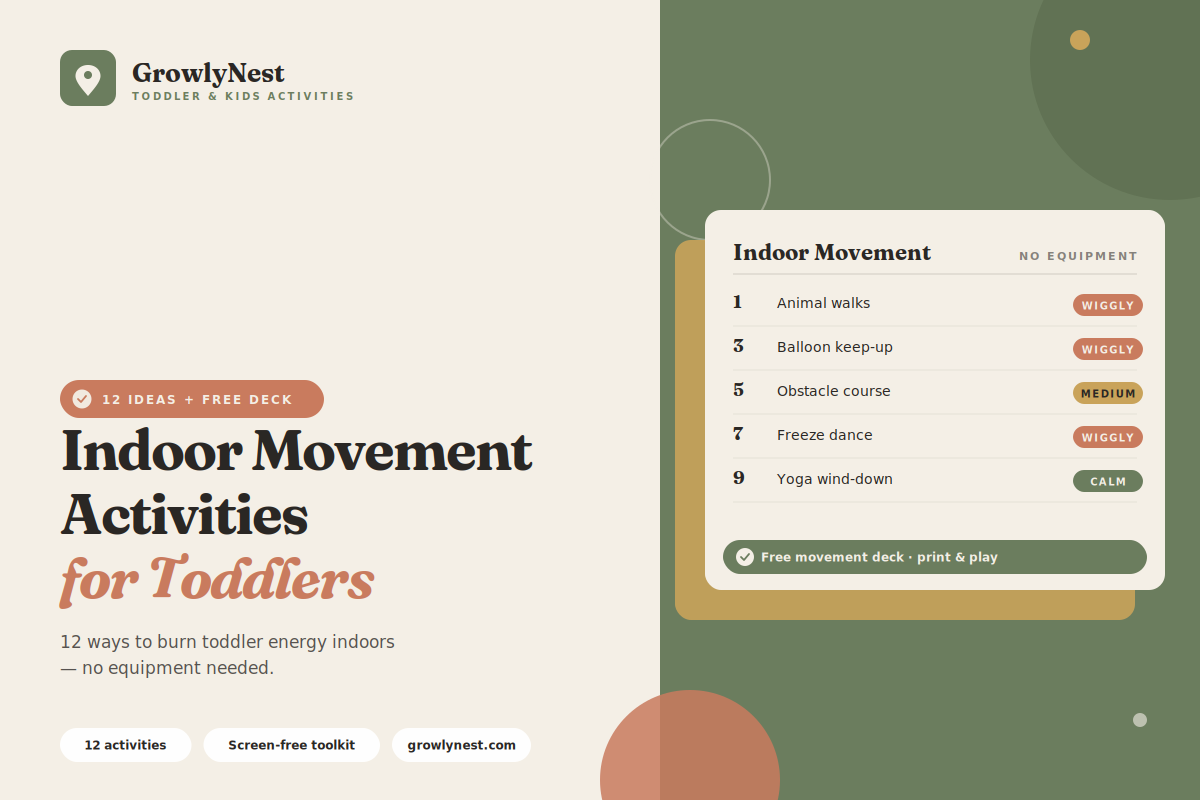
You know the feeling — it's been raining for days, your toddler is bouncing off the furniture, and the meltdown clock is ticking. Indoor movement activities for toddlers are the answer, and the best part is they need no equipment and very little space. Here are 12 ways to burn toddler energy indoors, plus the reframe that changes everything: use movement before the meltdown, not after.
Why indoor movement is your secret weapon against meltdowns
Toddlers are built to move — it's how they develop strength, coordination, and body awareness, and how their brains grow. A toddler who hasn't moved enough doesn't simply sit quietly; that unmet need spills out as restlessness, difficulty settling, and yes, meltdowns. Indoor movement activities give that powerful drive a healthy outlet, even when you can't get outside, and even in a small flat with no equipment at all.
Here's the reframe worth keeping: movement isn't just a way to tire a toddler out — it genuinely calms the nervous system. Physical activity helps a toddler regulate, which is why a good movement session often leaves a child calmer, not wilder. The real shift is using movement proactively: building movement breaks into the day and reaching for an activity when you see energy building, rather than waiting until your toddler is already melting down. Movement before the meltdown works far better than movement after it.
Free movement download
Get the Free Indoor Movement Activity Deck
Includes the guide every parent needs — why movement calms toddlers, and how to use it before the meltdown, not after — plus 30 movement cards tagged by energy level (high energy, calming, transition), a printable obstacle course, a finder by space and energy, and a “movement breaks” daily schedule. Built for small apartments and no equipment.
Download the Free Movement Deck →High-energy activities to burn it off
These big-movement activities give a toddler's energy a proper outlet — perfect when they're climbing the walls.
01. Animal walks
Move around the room as different animals — stomp like an elephant, hop like a frog, waddle like a penguin. Animal walks burn energy, build gross motor skills, and toddlers find them endlessly funny.
02. Balloon keep-up
Keep a balloon off the floor for as long as possible. The slow drift of a balloon is perfect for toddlers — it builds coordination and burns energy, with no risk to lamps or windows.
03. Indoor obstacle course
Build a course from cushions, chairs, and tape lines — crawl under, jump over, balance along. An obstacle course delivers a huge movement workout in a small space.
04. Jumping games
Jump over a line of tape, into hoops, or off a low cushion. Jumping is intense, satisfying physical work that burns energy fast and builds leg strength.
05. Freeze dance
Put on music and dance, freezing when it stops. Freeze dance burns energy and builds listening and self-control — the stopping is as valuable as the dancing.
06. Animal races
Race across the room as different animals, or have your toddler chase you. Quick bursts of running and racing burn energy and bring plenty of giggles.
Medium-energy activities for focus and skill
These activities channel energy into coordination and focus — great as a transition.
07. Balance line walking
Walk along a line of tape on the floor, heel to toe. Balance work builds coordination and concentration, and gently steadies a busy toddler.
08. Beanbag or soft-toy toss
Throw a beanbag or soft toy into a basket or at a target. Throwing builds coordination and aim, and the focus it takes is calming.
09. Crawling games
Crawl through tunnels made of chairs and blankets, or around a course. Crawling is excellent gross motor work and provides calming, regulating input through the arms.
Movement before the meltdown, not after
That one reframe changes everything — and the free Indoor Movement Activity Deck makes it easy. It includes a guide on why movement calms toddlers, 30 movement cards tagged by energy level, a printable obstacle course, a finder by space and energy, and a “movement breaks” daily schedule. No equipment, small-apartment friendly.
Get the Free Movement DeckCalming movement to wind down
End a movement session with calming activities — this is the regulation magic, settling a toddler before things tip over.
10. Toddler yoga poses
Try a few simple yoga poses — be a tree, a cat, a butterfly. Yoga calms the nervous system and is a lovely way to bring the energy down gently.
11. Slow-motion movements
Move in exaggerated slow motion across the room. Slowing the body right down is a playful, effective way to help a toddler settle and regulate.
12. Gentle stretches and breathing
Finish with easy stretches and a few slow, deep breaths together. Calm stretching and breathing settle the body and signal that the active time is ending.
Tips for indoor movement that works
1. Use movement before the meltdown
Don't wait until your toddler is dysregulated. Build movement breaks into the day and reach for an activity when you see restlessness building — proactive movement prevents far more meltdowns than reactive movement cures.
2. You need no equipment or space
Cushions, tape, balloons, and a small clear patch of floor are all you need. Indoor movement works in the smallest flat — clear a little space and you're ready.
3. End with calming movement
Structure a session from high energy down to calm — burn it off, then wind it down with yoga, slow motion, or stretching. Ending calm helps a toddler regulate rather than over-rev.
4. Move with your toddler
Toddlers love a movement partner, and joining in lifts your mood too. Doing the activities together makes them more fun and more likely to actually happen.
Frequently asked questions
How much movement does a toddler need each day?
Toddlers need a great deal of active movement spread across the day — guidance generally points to a few hours of physical activity in total. It doesn't need to be all at once; short, frequent movement breaks woven through the day work beautifully.
Can I do movement activities in a small apartment?
Absolutely. Indoor movement activities like animal walks, balloon games, yoga, and dancing need only a small clear patch of floor and no equipment. A small space is no barrier to a well-moved toddler.
Does my toddler need equipment for indoor movement?
No — everyday items are all you need. Cushions, tape, balloons, soft toys, and chairs cover an enormous range of movement activities. Special equipment is not needed at all.
How does movement help prevent meltdowns?
Movement helps regulate a toddler's nervous system, so a child with their movement needs met is generally calmer and copes better. Using movement proactively — before energy and frustration build up — heads off many meltdowns before they start.
My toddler gets more wound up by movement, not calmer. What helps?
Some movement is energising and some is calming. If active play winds your toddler up, always follow it with calming movement — yoga, slow motion, deep stretches, gentle rocking — to bring them back down. Ending a session calm is key.
The Indoor Movement Activity Deck
Movement that calms, in any size of home
Everything in one free download: the guide on why movement calms toddlers and how to use it before meltdowns, 30 movement cards tagged by energy level (high energy, calming, transition), a printable obstacle course, a finder by space and energy, and a “movement breaks” daily schedule — all designed for small apartments and no equipment.
Download the Free Movement Deck →Free forever · No spam · Unsubscribe any time
From the GrowlyNest family — helping you raise happy, well-moved toddlers, one joyful wiggle at a time.
You're getting — completely free
The Indoor Movement Activity Deck
Here's how to get it
It arrives in 1–2 minutes — check your inbox now.
If you don't see the "Gift File" check your Promotions or Spam folder. Drag it to your main inbox so future emails reach you.
Loading Viewer...