Home Learning · Ages 1–4 · Play-Based
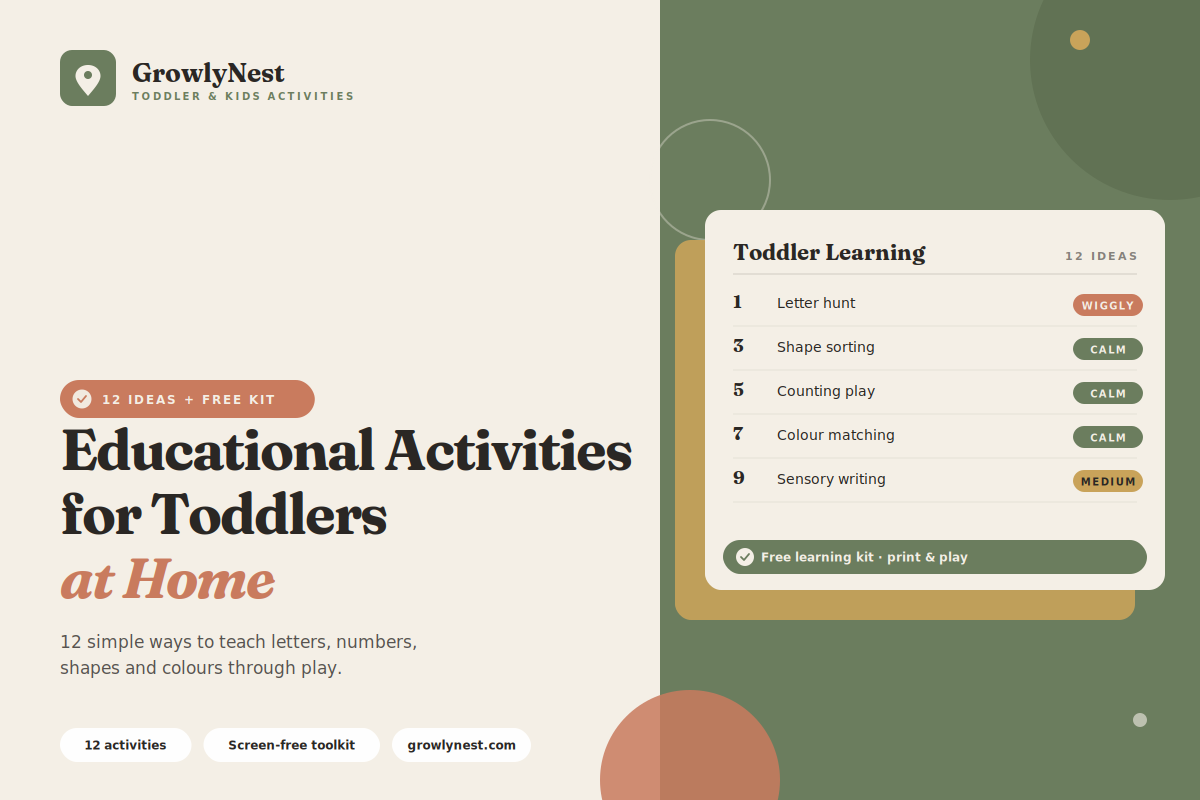
If you've ever wondered whether you should be "doing more" to teach your toddler at home, take a breath — this article is here to reassure you, not pile on. The truth is that toddlers learn best through play, and the most effective educational activities for toddlers at home look a lot like ordinary fun. Here are 12 simple, playful ways to nurture letters, numbers, shapes, and colours, with zero pressure.
How toddlers really learn — and why you're doing more than you think
Toddlers are learning constantly — not from worksheets or flashcards, but from play, conversation, and everyday life. When your child sorts socks, counts stairs, names colours at the shops, or hears a story, real, lasting learning is happening. Hands-on, playful experiences are exactly how a young brain builds the foundations of literacy and numeracy, because toddlers are concrete thinkers who learn by doing, touching, and exploring.
So if you're asking "am I doing enough?" — the honest answer is that you almost certainly are, and probably more than you realise. At this age there is no need to drill or formally teach. What matters most is curiosity, connection, language, and a love of learning, none of which come from a workbook. The activities below are simply playful ways to weave letters, numbers, shapes, and colours into days you're already having. Do the ones that appeal, skip the rest, and let your child lead.
Free home learning download
Get the Free Home Learning Starter Kit
Includes the reassuring guide every parent needs — what toddlers actually need to learn before school, and what can wait — plus letters, numbers, shapes and fine-motor worksheets, hands-on activity cards, a “learning through the day” guide for everyday moments, and a simple skills-by-age reference.
Download the Free Learning Kit →Playful activities for letters and early literacy
Letter learning at this age is about exposure and play, not mastery. Keep it light and follow your child's interest.
01. Letter hunt around the house
Pick a letter and search the house together for things that start with that sound. It turns letters into a game, builds letter-sound awareness, and there's no right or wrong — just noticing and naming.
02. Sensory letter writing
Spread salt, flour, or sand on a tray and form letters with a finger. The tactile experience makes letter shapes memorable, and any "mistake" simply wipes away — pressure-free and genuinely effective.
03. Read together every day
Sharing books is the single most powerful literacy activity there is. Reading aloud builds vocabulary, print awareness, and a love of stories — and snuggling up with a book is learning that feels like nothing but love.
04. Play with their name
A child's own name is their favourite word. Make their name with magnetic letters, spot its first letter out and about, or trace it together — a meaningful, motivating first step into letters.
Playful activities for numbers and shapes
Early maths is everywhere in a toddler's day. These activities make it visible and fun.
05. Count real things together
Count stairs as you climb, grapes on the plate, toys at tidy-up time. Counting real objects your child can touch builds genuine number sense far better than reciting numbers from a page.
06. Shape hunt
Look for circles, squares, and triangles around the house and outdoors — clocks, windows, signs. Spotting shapes in the real world makes them meaningful and turns a walk into gentle learning.
07. Sort and match shapes
Offer a set of shapes to sort into groups or match to outlines. Sorting builds early maths thinking and the ability to notice similarities and differences.
08. Make simple patterns
Lay out a repeating pattern with toys, blocks, or snacks — red, blue, red, blue — and invite your toddler to continue it. Pattern-making is a surprisingly important early-maths skill.
Quietly wondering “am I doing enough?”
You almost certainly are — and the free Home Learning Starter Kit is here to reassure you. It includes a calm, anti-pressure guide to what toddlers really need before school and what can wait, letters, numbers, shapes and fine-motor worksheets, hands-on activity cards, a “learning through the day” guide, and a simple skills-by-age reference.
Get the Free Learning KitPlayful activities for colours and everyday learning
Some of the best learning happens in the moments you're already in. These ideas weave it into the day.
09. Colour matching games
Match objects to colour cards, or sort toys by colour into bowls. A simple, satisfying activity that builds colour recognition and naming through hands-on play.
10. Learn through everyday moments
Narrate and notice as you go through the day — count the apples at the shop, name colours of passing cars, talk about shapes at lunch. Embedding learning into ordinary routines is effortless and powerful.
11. Cook and bake together
Cooking is packed with learning — counting, measuring, colours, sequencing, new words. Letting your toddler help stir and pour turns a daily task into a rich, hands-on lesson.
12. Follow your child's interests
Whatever fascinates your toddler — diggers, dinosaurs, animals — is your best teaching tool. Count the dinosaurs, sort them by colour, find the letter their favourite starts with. Interest-led learning sticks.
Tips for relaxed, effective home learning
1. Keep it playful and short
Toddlers learn in short, joyful bursts, not long sessions. A few minutes of a game, woven into the day, does far more than a forced "lesson." If it stops being fun, stop.
2. Follow your child, not a curriculum
There's no syllabus a toddler must complete. Follow your child's interests and developmental stage, and let their curiosity set the pace. Interest-led learning is the most effective kind.
3. Resist comparing your child to others
Children develop at wildly different rates, all completely normal. Comparing your toddler to another child — or to a milestone chart — steals the joy and rarely reflects anything real.
4. Remember connection is the curriculum
The talking, reading, playing, and everyday togetherness you already do is the most valuable "educational activity" of all. You don't need to add pressure — you need to keep connecting.
Frequently asked questions
Am I doing enough to teach my toddler at home?
Almost certainly yes — and probably more than you think. Toddlers learn through play, conversation, books, and everyday life, all of which you're already providing. There's no need to drill or formally teach at this age; curiosity and connection matter far more.
What should a toddler learn before starting school?
Far less academic content than parents often fear. What genuinely matters is language, curiosity, confidence, independence, social skills, and a love of learning. Letters and numbers come gradually through play — early academic drilling is not needed and can wait.
Do I need worksheets and flashcards for my toddler?
No. Toddlers are hands-on, concrete learners who benefit most from play, real objects, and conversation rather than worksheets or flashcards. Playful, everyday activities are more effective and far more enjoyable.
My toddler isn't interested in letters and numbers. Should I worry?
Not at all. Interest in letters and numbers emerges at very different ages, and forcing it tends to backfire. Follow your child's genuine interests, keep learning playful, and the academic concepts will come in their own time.
How much time should I spend on educational activities?
There's no required amount. A few short, playful moments woven through an ordinary day is plenty for a toddler. The everyday talking, reading, and playing you already do is the real learning — it doesn't need to be timetabled.
The Home Learning Starter Kit
Home learning, without the pressure
Everything in one free, reassuring download: the guide to what toddlers actually need before school and what can wait, letters, numbers, shapes and fine-motor worksheets, hands-on activity cards, a “learning through the day” guide for everyday moments, and a simple skills-by-age reference.
Download the Free Learning Kit →Free forever · No spam · Unsubscribe any time
From the GrowlyNest family — helping you nurture curious, confident learners through play, without the pressure.
You're getting — completely free
The Home Learning Pack
Here's how to get it
It arrives in 1–2 minutes — check your inbox now.
If you don't see the "Gift File" check your Promotions or Spam folder. Drag it to your main inbox so future emails reach you.
Loading Viewer...