Life Skills · Self-Care · Independence
Teaching a toddler to care for their own body and belongings can feel like a slow uphill climb — but self-care skills are some of the most valuable gifts you can give your child. They build confidence, independence, and a quiet sense of "I can look after myself." Here are practical self care activities for toddlers, with a clear path from your help to their independence.
Why self-care skills matter — and the mindset shift behind them
Self-care skills — washing, dressing, toileting, tidying up after yourself — are the everyday foundations of independence. When a toddler can do these things, they gain something far bigger than clean hands: they gain the deep, confidence-building knowledge that they are capable of looking after themselves. Self-care skills also support a child's growing autonomy and dignity, reduce daily friction (a child who can dress themselves is one less battle), and prepare them for the wider world of preschool and beyond. These are not small skills; they are the building blocks of a competent, confident person.
And here is the mindset shift that makes them possible: you have to let your toddler practise, even though it's slower and messier than doing it yourself. Toilet learning, getting dressed, washing hands properly — a toddler doing these takes far longer than you doing them, and the early results are imperfect. The pull to step in and do it quickly is strong, especially when you're rushed. But each time you do a self-care task for your child, the skill stays with you instead of transferring to them. Self-care is learned only by doing it, repeatedly and imperfectly. The slower path, chosen patiently now, is what produces a genuinely self-sufficient child.
Free printable download
Get the Free Life Skills & Independence Pack
Includes the guide every parent needs — the mindset shift of letting them do it themselves, even when it's slower — plus an age-by-age skill guide (what to teach at 1, 2, 3, 4 and 5), a simple “how to teach a new skill” framework (model → practice → step back), self-care checklists, an independence milestone tracker, and chores reframed as contribution. It answers the big one: “it's faster if I just do it myself.”
Download the Free Life Skills Pack →Everyday self-care activities to teach
These are the core self-care skills, with simple ways to teach each one. Pitch them to your child's stage and expect lots of practice.
01. Hand washing
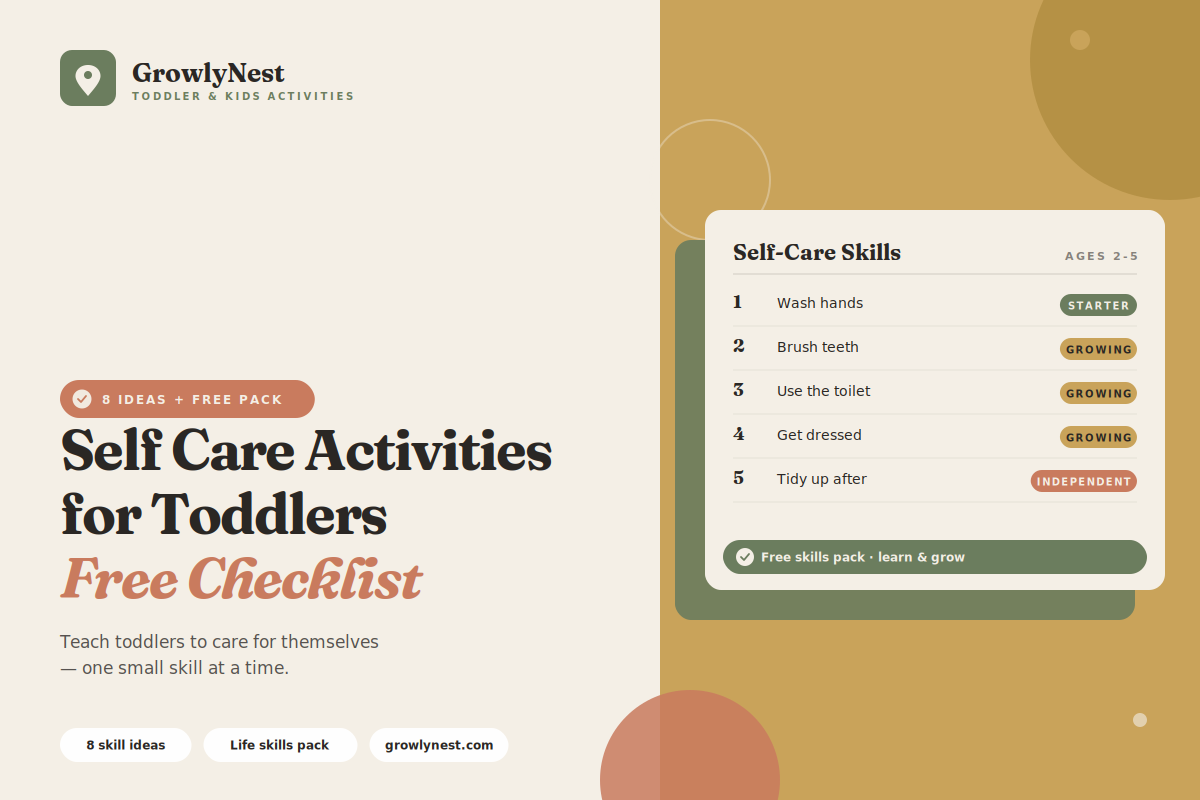
Hand washing is a great first self-care skill — achievable early and genuinely important. Teach it as a sequence: wet hands, soap, rub for a count or a short song, rinse, dry. A step stool at the sink makes it possible for a toddler to do independently, which is the whole goal.
02. Brushing teeth
Toddlers can begin brushing with you well before they can do it alone. Let them have a turn brushing first, then you 'finish the job' to make sure it's thorough — a gentle way to share the task while building the habit. A timer, a song, or a mirror all make it more engaging.
03. Getting dressed and undressed
Undressing comes before dressing, so start there — toddlers can pull off socks and easy clothes early. For dressing, teach one garment at a time, and lay clothes out the right way up to make success more likely. Loose, simple clothing with easy fastenings sets a learning toddler up to win.
04. Toileting and wiping
When your child shows readiness signs, toilet learning is a major self-care milestone. Keep it calm, low-pressure, and matter-of-fact, and teach the whole sequence including wiping and hand washing. Accidents are a normal, expected part of learning — meet them with calm rather than disappointment.
05. Tidying up after themselves
Self-care includes caring for your space, so teach your toddler to tidy up after activities — putting toys away, clearing their plate, hanging up a coat. "We finish by tidying up" becomes a natural rhythm. Make it doable with low hooks, labelled baskets, and a cheerful tidy-up routine.
Let them do it themselves — even when it's slower
That one mindset shift changes everything — and the free Life Skills & Independence Pack makes it doable. It includes an age-by-age skill guide for ages 1 to 5, a simple model → practice → step back framework, self-care checklists, an independence milestone tracker, and chores reframed as contribution.
Get the Free Life Skills PackBuilding self-care into daily life
Self-care skills stick when they're woven into the everyday, not treated as separate lessons.
06. Use a visual self-care checklist
A simple picture checklist of the self-care routine — wash, brush, dress — helps a toddler see what comes next and do it with growing independence. It shifts the prompting from you ("now brush your teeth") to the chart, which builds genuine ownership of the routine.
07. Set up the environment for success
A toddler can only be independent if the environment allows it. A step stool at the sink, a low towel hook, clothes within reach, an accessible toothbrush — these small set-ups are what turn "I'll do it for you" into "you can do it yourself."
08. Build in time and expect imperfection
Self-care done by a toddler is slow and imperfect, so allow generous time and lower your standards. A wonky bit of tooth-brushing or a top on backwards is the look of a skill being learned. Praise the effort and let good-enough be good enough.
Tips for teaching self-care skills
1. Teach skills in small steps
Break each self-care skill into tiny steps and let your toddler master one at a time. 'Get dressed' is overwhelming; 'pull up your trousers' is achievable. Small steps build steady success.
2. Set up the environment for independence
A step stool, low hooks, and reachable supplies are what make self-care possible for a small body. Adjust the environment so your toddler genuinely can do it themselves.
3. Allow plenty of time
Self-care done by a toddler is slow. Build extra time into mornings and routines so you can let them practise instead of taking over to save minutes.
4. Keep it calm and pressure-free
Self-care skills, especially toileting, are learned best without pressure or shame. Stay calm and matter-of-fact about setbacks — calm patience teaches faster than frustration.
Frequently asked questions
What self-care skills should a toddler learn?
Core toddler self-care skills include hand washing, brushing teeth, getting dressed and undressed, toileting, and tidying up after themselves. These build gradually from around age 2, with toddlers needing plenty of support before doing them independently.
Isn't it faster to just dress and wash my toddler myself?
In the short term, yes — but doing self-care tasks for your child means the skill never transfers to them. Self-care is learned only through repeated practice, which is slow at first. Allowing the slower path now builds a genuinely self-sufficient child.
How do I teach my toddler to get dressed?
Start with undressing, which is easier, then teach dressing one garment at a time. Lay clothes out the right way up, choose loose clothing with simple fastenings, and use the model–practise–step back approach. Expect many imperfect attempts before independence.
My toddler resists self-care tasks. What can I do?
Resistance often eases when a child has more control, so offer choices (which toothbrush, which top), make tasks playful, use a visual checklist, and keep your tone calm and unhurried. Following your toddler's interest and avoiding pressure both help a great deal.
What age should toddlers do self-care independently?
It varies, but many children manage much of their basic self-care fairly independently by around age 4 to 5, with earlier skills like hand washing coming sooner. Development varies widely, so treat ages as a guide and follow your own child's pace.
The Life Skills & Independence Pack
Raise a capable, confident, independent child
Everything in one free download: the guide on the mindset shift of letting them do it themselves even when it's slower, an age-by-age skill guide for ages 1 to 5, a simple “how to teach a new skill” framework (model → practice → step back), self-care checklists, an independence milestone tracker, and chores reframed as contribution — for parents ready to move past “it's faster if I just do it myself.”
Download the Free Life Skills Pack →Free forever · No spam · Unsubscribe any time
From the GrowlyNest family — cheering you on as you raise a capable, confident, independent child, one slow and wobbly skill at a time.
You're getting — completely free
The Life Skills & Independence Pack
Here's how to get it
It arrives in 1–2 minutes — check your inbox now.
If you don't see the "Gift File" check your Promotions or Spam folder. Drag it to your main inbox so future emails reach you.
Loading Viewer...