
Bedtime · Ages 1–4 · Calm Nights
A difficult bedtime can colour your whole evening — the negotiating, the extra requests, the slow unravelling of calm. A bedtime routine chart is one of the most effective tools for changing that, because it makes the wind-down predictable and takes the nightly negotiation off the table. Here's a complete bedtime routine for toddlers, plus how to get your child to actually follow it.
Why a bedtime routine chart leads to calmer nights
Sleep researchers consistently point to one thing as the foundation of good sleep: a consistent, predictable bedtime routine. A bedtime routine chart makes that routine visible. The same calming steps, in the same order, every night, signal to a toddler's body and brain that sleep is coming — and that predictability lowers the resistance and anxiety that fuel bedtime battles.
A chart also ends the nightly negotiation. When the steps are set out visually, bedtime stops being a series of things you ask for and your toddler bargains over. "One more story" loses its power when the chart clearly shows one story, then lights out. The chart becomes the calm, consistent authority — but only if you use it consistently, which is what the strategies below ensure.
Free routine chart download
Get the Free Complete Kids Routine Chart Bundle
Includes the guide parents really need — how to get kids to actually follow the chart — plus morning, bedtime, after-school and chore charts, a routine builder worksheet to design your routine first, blank customisable versions, pre-reader picture cards, and travel and weekend troubleshooting.
Download the Free Routine Bundle →A sample bedtime routine for toddlers
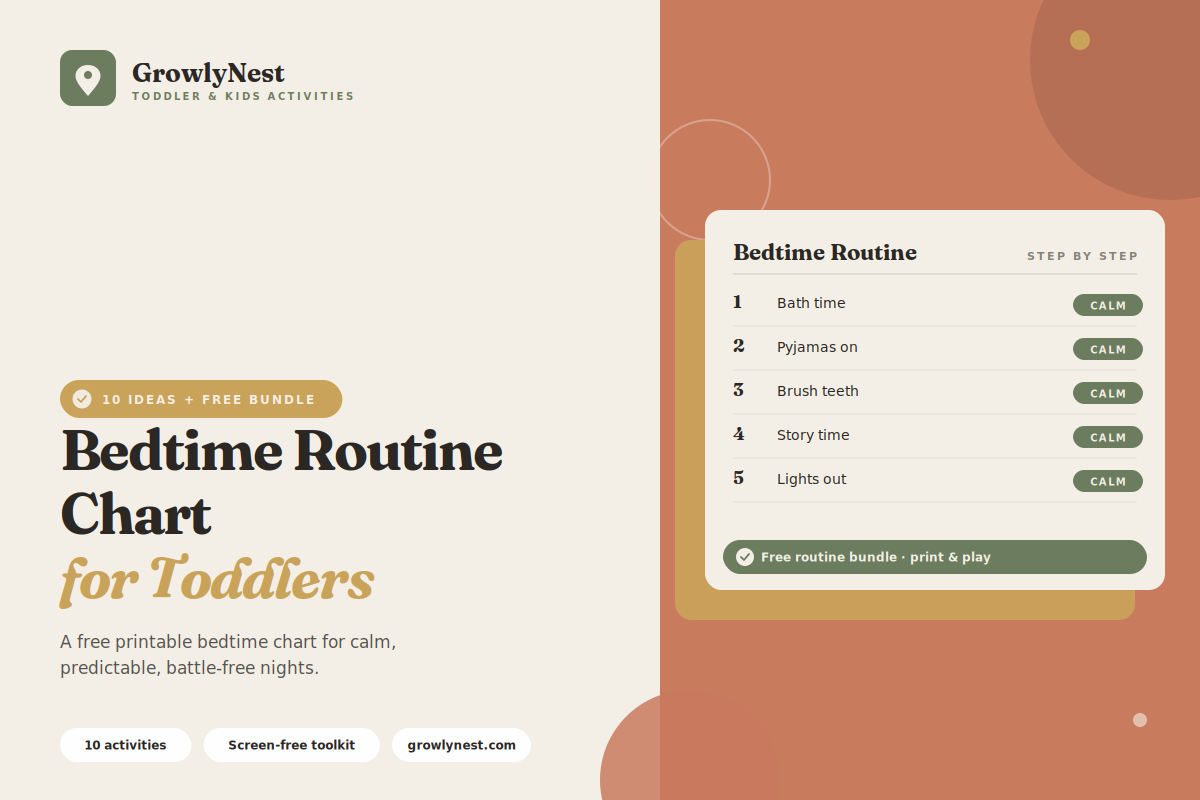
Here is a calm, copyable bedtime sequence. The exact steps can flex, but keep the same order every night — consistency is what makes a bedtime routine work.
01. Tidy-up time
A quick tidy of the toys together signals that the day is winding down. Making it the first bedtime step gives a clear, gentle start to the routine.
02. Bath time
A warm bath is a powerful wind-down cue — the warmth and the calm of the water genuinely help a toddler's body prepare for sleep. Keep bath play gentle rather than boisterous.
03. Pyjamas on
Into pyjamas straight after the bath. Letting your toddler help builds independence, and the fresh, cosy pyjamas reinforce that it's nearly sleep time.
04. Brush teeth
Teeth-brushing comes after the bath as part of the settled wind-down. Keeping it in the same slot every night makes it a non-negotiable habit.
05. Story time
One or two stories, snuggled up together. Reading together is calming, connecting, and one of the loveliest parts of the day — and the chart makes the number of stories clear from the start.
06. Lights out and goodnight
A final cuddle, a consistent goodnight phrase, and lights out. Ending the routine the same way every night gives your toddler a clear, secure signal that it is time to sleep.
Struggling to get your child to follow the chart?
A chart on the wall is the easy part — getting kids to actually follow it is the real struggle. The free Complete Kids Routine Chart Bundle includes the step-by-step guide for exactly that, plus a routine builder worksheet, ready-made charts, pre-reader picture cards, and troubleshooting for travel and weekends.
Get the Free Routine BundleHow to get your toddler to follow the bedtime chart
A bedtime chart only calms nights if your toddler genuinely follows it. These strategies make that happen.
07. Make the chart together
Let your toddler help create the chart and place the pictures. A toddler who feels ownership of the bedtime chart is far more willing to follow it.
08. Let the chart answer the requests
When the extra requests come, refer to the chart calmly — "the chart shows one story, and then it's lights out." The chart becomes the consistent authority, so you're not negotiating night after night.
09. Keep the routine consistent and unhurried
Use the same steps in the same order every night, and don't rush them — a calm pace is part of the wind-down. Consistency is what trains your toddler's body to expect sleep.
10. Start the routine early enough
Begin the wind-down before your toddler is overtired. An overtired toddler resists sleep far more, so watch for the early tired signs and start the chart in good time.
Tips for a peaceful bedtime
1. Dim the lights and lower the energy
As the routine begins, dim the lights and keep voices and activity calm. A calm environment supports the chart in signalling that sleep is near.
2. Keep screens out of the wind-down
Screens before bed make settling harder. Keep the hour before bed screen-free so the bedtime routine can do its job.
3. Be consistent across caregivers
Make sure everyone who does bedtime follows the same chart in the same order. Consistency between parents and carers is what makes the routine reliable.
4. Hold the boundary kindly
When your toddler tests the routine, stay warm but firm — acknowledge the feeling and gently return to the chart. Calm consistency teaches that bedtime is settled and safe.
Frequently asked questions
What age should a toddler start a bedtime routine chart?
A picture-based bedtime chart works well from around 18 months to 2 years. Keep it to a few simple steps for younger toddlers and adjust as they grow.
My toddler still stalls at bedtime even with a chart. What helps?
Let the chart hold the boundary — refer to it calmly rather than negotiating each request. Make sure the routine starts before your toddler is overtired, and that they helped make the chart so they feel ownership of it.
How long should a bedtime routine take?
Around 30 to 45 minutes is typical, from tidy-up to lights out. The exact length matters less than keeping the same calm, unhurried sequence every night.
Should the bedtime chart have set times?
A consistent order of steps matters more than exact times. You might aim to start the routine around the same time each evening, but let the steps themselves flow at a calm pace.
Will a bedtime chart work if our nights are currently very difficult?
Yes, though give it time. A consistent bedtime routine is the foundation of better sleep, but expect one to two weeks of consistent use before nights noticeably improve.
The Complete Kids Routine Chart Bundle
A routine that actually sticks
Everything in one free download: the guide to getting kids to actually follow the chart, morning, bedtime, after-school and chore charts, a routine builder worksheet to design your routine first, blank customisable versions, pre-reader picture cards, and troubleshooting for travel and weekends.
Download the Free Routine Bundle →Free forever · No spam · Unsubscribe any time
From the GrowlyNest family — helping you build calm, predictable routines your children genuinely follow.
You're getting — completely free
The Complete Kids Routine Chart Bundle
Here's how to get it
It arrives in 1–2 minutes — check your inbox now.
If you don't see the "Gift File" check your Promotions or Spam folder. Drag it to your main inbox so future emails reach you.
Loading Viewer...