Gentle Parenting · Ages 1–5 · Predictable Rhythms
Gentle parenting and routine charts can sound like an odd pair — isn't a chart just a tool for getting compliance? In fact, a thoughtfully used routine chart fits gentle parenting beautifully: it offers a child the security of predictable rhythms while keeping connection, not control, at the centre. Here's a connection-first daily rhythm you can copy, plus how to use a chart the gentle way.
Why routine charts support gentle parenting
Gentle parenting is built on connection, empathy, and respect for the child as a whole person — and predictability is one of the kindest things you can offer a young child. When a toddler knows the rhythm of their day, they feel safe, and a child who feels safe is calmer, more cooperative, and more able to manage their emotions. A visual routine chart gives a child that security in a way they can see and understand, which is gentle parenting in action, not at odds with it.
The difference is in how the chart is used. In a gentle approach, the chart is never a threat or a tool for coercion — it's a shared, supportive guide that lets a child anticipate their day and exercise real choice within it. It also removes a great deal of conflict, because the rhythm leads instead of the parent directing, which frees you up to stay in the warm, connected role. The strategies below show how to keep a chart firmly gentle.
Free routine chart download
Get the Free Complete Kids Routine Chart Bundle
Includes the guide parents really need — how to get kids to actually follow the chart — plus morning, bedtime, after-school and chore charts, a routine builder worksheet to design your routine first, blank customisable versions, pre-reader picture cards, and travel and weekend troubleshooting.
Download the Free Routine Bundle →A sample gentle parenting daily rhythm
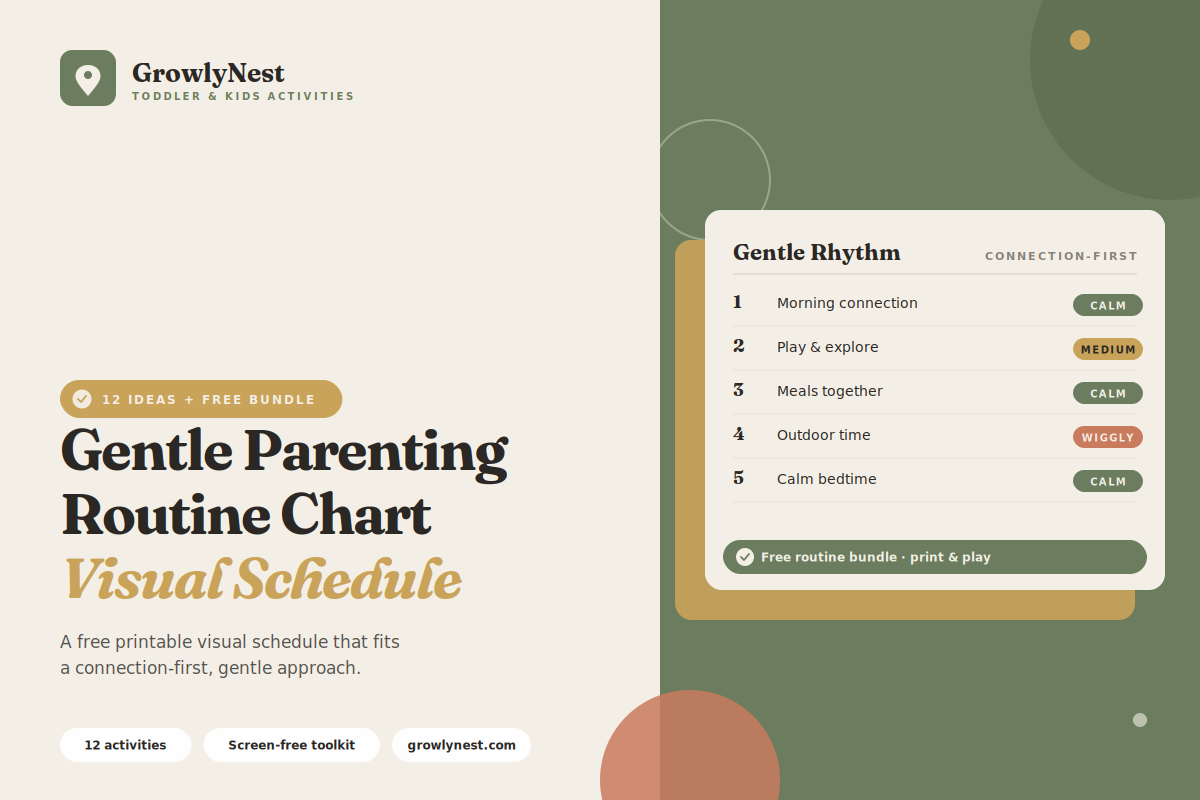
Here is a connection-first daily rhythm to copy and adapt. Notice how connection is woven through it, not bolted on.
01. Morning connection time
Begin the day with unhurried connection — a cuddle, a slow start, a few minutes of full attention before anything practical. A child whose connection cup is filled first cooperates far more willingly all morning.
02. Gentle morning routine
Move into the morning steps — dressing, breakfast, washing — at a calm, unrushed pace, offering choices where you can. Letting the rhythm lead, rather than barking instructions, keeps the morning warm.
03. Child-led play and exploration
A generous block of play your child genuinely directs. Following your child's lead in play honours their interests and is deeply connecting.
04. Meals together
Calm, shared mealtimes with real connection — conversation, presence, no rushing. In a gentle approach, meals are about togetherness as much as food.
05. Outdoor time and movement
A block of outdoor play and movement. Fresh air and physical play support a child's mood and regulation, and exploring together builds connection.
06. Quiet, calm downtime
A daily anchor of calm, quiet time — rest, reading, gentle play. Honouring a child's need for downtime prevents the overwhelm that fuels hard moments.
07. Afternoon reconnection
A deliberate slot of one-on-one connection in the afternoon — especially valuable after time apart or a busy stretch. Reconnecting proactively heads off difficult behaviour.
08. Calm, connected bedtime
Close the day with a warm, unhurried bedtime routine full of connection — stories, cuddles, gentle talk. A connected end to the day supports calm sleep and a secure child.
Struggling to get your child to follow the chart?
A chart on the wall is the easy part — getting kids to actually follow it is the real struggle. The free Complete Kids Routine Chart Bundle includes the step-by-step guide for exactly that, plus a routine builder worksheet, ready-made charts, pre-reader picture cards, and troubleshooting for travel and weekends.
Get the Free Routine BundleHow to use the routine chart the gentle way
What makes a chart gentle is entirely in how it's used. These strategies keep it connection-first.
09. Make the chart with your child
Create the chart together as a shared project, letting your child help choose the steps and pictures. A collaboratively made chart belongs to the child — it's a shared guide, not a parent's tool of control.
10. Never use the chart as a threat
A routine chart in a gentle approach is never a way to coerce — never "do it or else." It is a supportive, neutral guide the child can lean on. The moment it becomes a threat, it stops being gentle.
11. Offer real choice within the rhythm
Let your child make genuine choices inside the routine — which activity first, what to wear, which story. Predictable structure and real autonomy work together; the chart holds the rhythm while the child keeps agency.
12. Stay connected when your child resists
When your child pushes against the routine, respond with empathy first — acknowledge the feeling, stay warm, and gently return to the chart together. Connection, not pressure, is what moves things forward.
Tips for gentle, connected routines
1. Lead with connection, always
Fill your child's connection cup first — through morning time, presence at meals, and reconnection through the day. A connected child cooperates far more, and connection is the heart of the whole approach.
2. Acknowledge feelings about the routine
When your child doesn't want to follow a step, validate the feeling — "you're having such fun, it's hard to stop." Feeling understood helps a child move on far better than being pushed.
3. Hold the rhythm with warmth
Gentle parenting still includes structure and boundaries — held kindly. The routine gives helpful, secure limits; warmth is simply how you hold them.
4. Adapt the chart to your child
Observe how your individual child responds and adjust the rhythm to suit them. A gentle routine flexes around the real child in front of you.
Frequently asked questions
Do routine charts go against gentle parenting?
Not at all. A routine chart offers the predictability that helps a child feel safe and calm, which is fully in keeping with gentle parenting. What matters is using it as a supportive, shared guide rather than a tool for coercion.
How do I use a routine chart without it feeling controlling?
Make the chart with your child, offer real choices within the rhythm, never use it as a threat, and respond to resistance with empathy. Used this way, the chart is a gentle guide the child owns, not a parent's instrument of control.
What if my child resists the routine?
Respond with connection first — acknowledge the feeling, stay warm, and gently return to the chart together. In a gentle approach, resistance is met with empathy, not pressure, and connection is what moves things forward.
Does gentle parenting mean no structure at all?
No — gentle parenting includes structure and boundaries, simply held with warmth and respect. A predictable routine gives a child the secure limits they genuinely need; the gentleness is in how those limits are held.
What age is a gentle parenting routine chart for?
A connection-first visual routine suits children from around age 1 through the preschool years and beyond. The pictures and steps grow with the child, while the connection-first principle stays constant.
The Complete Kids Routine Chart Bundle
A routine that actually sticks
Everything in one free download: the guide to getting kids to actually follow the chart, morning, bedtime, after-school and chore charts, a routine builder worksheet to design your routine first, blank customisable versions, pre-reader picture cards, and troubleshooting for travel and weekends.
Download the Free Routine Bundle →Free forever · No spam · Unsubscribe any time
From the GrowlyNest family — helping you build calm, predictable routines your children genuinely follow.
You're getting — completely free
The Complete Kids Routine Chart Bundle
Here's how to get it
It arrives in 1–2 minutes — check your inbox now.
If you don't see the "Gift File" check your Promotions or Spam folder. Drag it to your main inbox so future emails reach you.
Loading Viewer...