
Gross Motor · Ages 1–4 · Physical Development
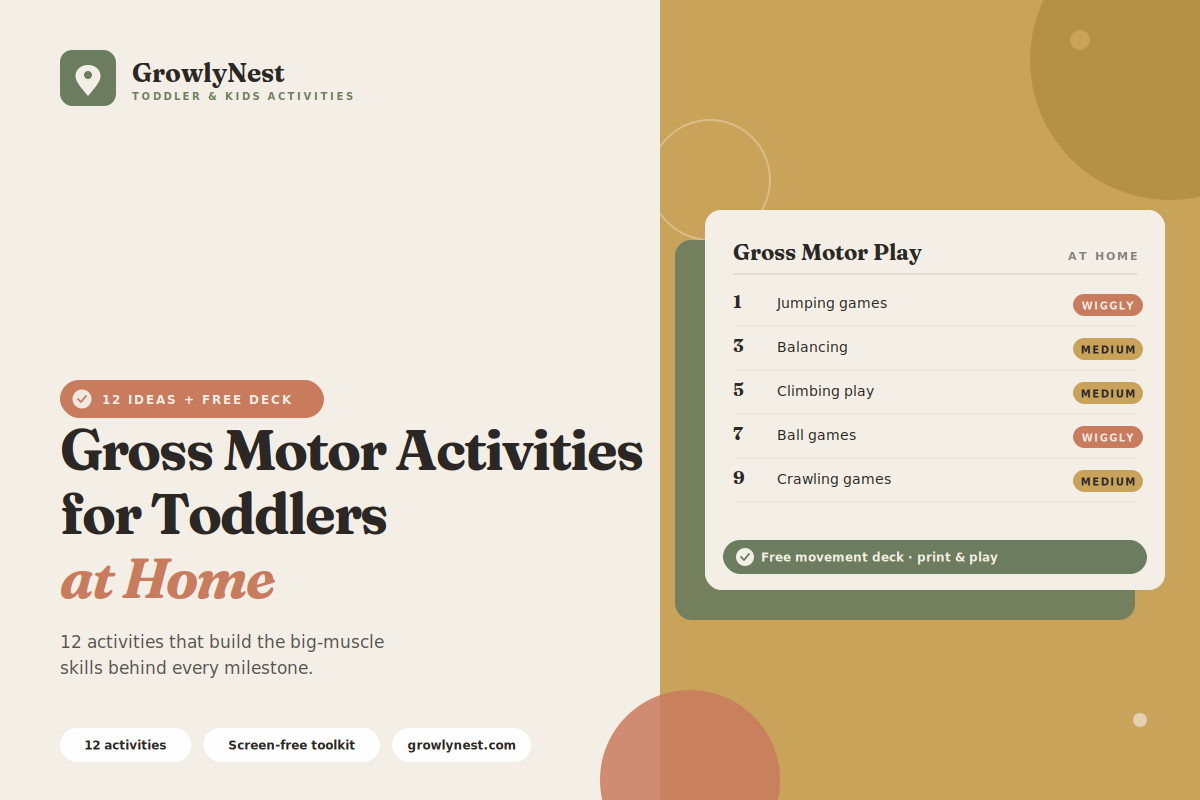
Every time your toddler runs, climbs, jumps, or throws, they're doing the essential work of childhood — building their gross motor skills. These big-muscle skills underpin every physical milestone, and they need plenty of practice. Here are 12 gross motor activities you can do at home, with no special equipment, plus why this movement does so much more than build muscles.
Why gross motor skills matter so much
Gross motor skills are the abilities that use the large muscles of the body — running, jumping, climbing, balancing, throwing, kicking. They're the foundation of physical development: every milestone from confident walking to riding a bike rests on them, and they build the strength, coordination, balance, and body awareness a child needs to move through the world. Gross motor development also lays groundwork for fine motor skills and even for sitting and focusing later on, because core strength and stability come first.
There's a deeper benefit, too. Big-muscle movement helps regulate a toddler's nervous system — it's genuinely calming, organising input for the body and brain. A toddler who gets plenty of gross motor activity is usually a calmer, better-regulated toddler, while one who hasn't moved enough often becomes restless and prone to meltdowns. So building gross motor play into the day isn't only about physical skills; it's one of the best things you can do for behaviour and mood. Reach for it proactively, before the wobble, not just after.
Free movement download
Get the Free Indoor Movement Activity Deck
Includes the guide every parent needs — why movement calms toddlers, and how to use it before the meltdown, not after — plus 30 movement cards tagged by energy level (high energy, calming, transition), a printable obstacle course, a finder by space and energy, and a “movement breaks” daily schedule. Built for small apartments and no equipment.
Download the Free Movement Deck →Activities that build strength and power
These big-movement activities build the muscle strength behind every gross motor skill.
01. Jumping games
Jump over lines, into hoops, or off low cushions. Jumping builds leg strength, power, and coordination, and the intense physical effort is satisfying and regulating.
02. Climbing play
Offer safe climbing — over sofa cushions, up to a low platform, on age-appropriate equipment. Climbing builds whole-body strength, problem-solving, and spatial awareness.
03. Crawling and animal walks
Crawl through tunnels and move as different animals — bear walks, crab walks. These build upper-body and core strength and provide calming, regulating input.
04. Pushing and pulling games
Push a laundry basket loaded with toys, pull a wagon, move cushions around. Pushing and pulling build strength and give the deep-pressure input that helps a toddler regulate.
Activities that build balance and coordination
These activities build the balance, control, and coordination behind smooth movement.
05. Balancing activities
Walk along a tape line or low beam, balance on one foot, try wobble play. Balance work builds core strength, stability, and focus, and it's calming concentration practice.
06. Ball games
Roll, throw, catch, and kick a ball together. Ball games build hand-eye and foot-eye coordination, timing, and gross motor control, all through joyful play.
07. Obstacle courses
Build a course to crawl under, jump over, balance along, and climb through. An obstacle course works a whole range of gross motor skills in one engaging activity.
08. Dancing and movement to music
Dance, copy moves, and move to fast and slow music. Dancing builds coordination, rhythm, and body awareness, and it's a joyful energy outlet.
Movement before the meltdown, not after
That one reframe changes everything — and the free Indoor Movement Activity Deck makes it easy. It includes a guide on why movement calms toddlers, 30 movement cards tagged by energy level, a printable obstacle course, a finder by space and energy, and a “movement breaks” daily schedule. No equipment, small-apartment friendly.
Get the Free Movement DeckEveryday gross motor movement
Gross motor practice is woven through ordinary days — these ideas make the most of it.
09. Active outdoor time
Running, climbing, and free play outdoors gives gross motor skills the space they need. Outdoor time is one of the richest sources of big-muscle movement.
10. Movement breaks through the day
Build short movement breaks into the day — a quick dance, animal walks, jumping. Frequent movement breaks keep a toddler regulated and prevent energy building into meltdowns.
11. Help with active household tasks
Carrying, sweeping, tidying, and helping in the garden are real gross motor practice. Letting your toddler join in active tasks builds strength and a sense of capability.
12. Walk instead of riding where you can
Let your toddler walk rather than always using the pram or buggy. Everyday walking builds stamina, strength, and balance, and adds valuable movement to ordinary outings.
Tips for building gross motor skills
1. Make movement a daily habit
Gross motor skills develop through regular practice. Weave plenty of active play into every day, indoors and out, so movement is simply a normal part of life.
2. Use movement to regulate, not just exercise
Remember that gross motor play calms and organises a toddler. Use it proactively when you see restlessness building — movement before the meltdown is one of your best tools.
3. Let your toddler take safe risks
Climbing, jumping, and balancing involve a little safe risk, and that's how skills and confidence grow. Supervise and keep things safe, but resist over-restricting your toddler's movement.
4. Follow their stage, not a fixed timeline
Gross motor skills develop at different rates, all normal. Offer activities pitched at your child's stage, and let them progress at their own pace rather than to a timetable.
Frequently asked questions
What are gross motor skills?
Gross motor skills are abilities that use the large muscles of the body — running, jumping, climbing, balancing, throwing, kicking. They're the foundation of physical development and underpin strength, coordination, balance, and body awareness.
How can I build my toddler's gross motor skills at home?
Through everyday active play — jumping, climbing, balancing, ball games, animal walks, dancing, and obstacle courses, indoors and out. No special equipment is needed; cushions, tape, and balls cover an enormous range.
Do gross motor activities help with behaviour?
Yes — big-muscle movement helps regulate a toddler's nervous system, so a well-moved toddler is generally calmer and copes better. Plenty of gross motor play, used proactively, prevents a great deal of restlessness and many meltdowns.
My toddler seems behind with physical skills. Should I worry?
Gross motor skills develop at very different rates, and a wide range is normal. Offer plenty of movement at your child's stage. If you have genuine concerns about your toddler's physical development, your health visitor or doctor can offer reassurance or support.
How much gross motor activity does a toddler need?
Toddlers need a great deal of active movement across the day — guidance generally points to a few hours of physical activity in total, spread through the day in short, frequent bursts rather than one long session.
The Indoor Movement Activity Deck
Movement that calms, in any size of home
Everything in one free download: the guide on why movement calms toddlers and how to use it before meltdowns, 30 movement cards tagged by energy level (high energy, calming, transition), a printable obstacle course, a finder by space and energy, and a “movement breaks” daily schedule — all designed for small apartments and no equipment.
Download the Free Movement Deck →Free forever · No spam · Unsubscribe any time
From the GrowlyNest family — helping you raise happy, well-moved toddlers, one joyful wiggle at a time.
You're getting — completely free
The Indoor Movement Activity Deck
Here's how to get it
It arrives in 1–2 minutes — check your inbox now.
If you don't see the "Gift File" check your Promotions or Spam folder. Drag it to your main inbox so future emails reach you.
Loading Viewer...