Potty Training · Ages 2–3 · Encouragement
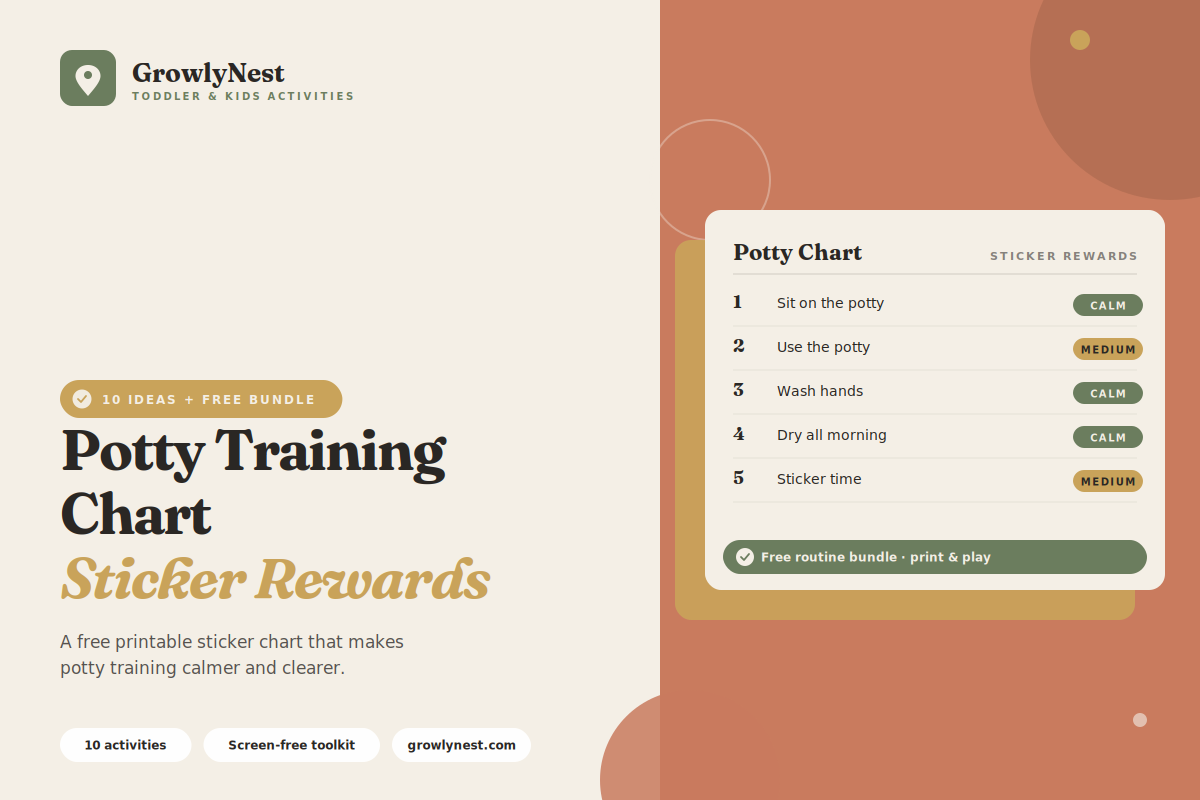
Potty training is one of the more stressful milestones — full of pressure, mess, and uncertainty about whether you're doing it right. A potty training chart with a sticker reward system gives the process structure and turns it into something positive your child can see progress on. Here's how to use a potty chart well, including how to keep your child genuinely motivated.
Why a potty training chart helps
Potty training is abstract and invisible to a small child — it's hard for them to grasp progress or feel a sense of achievement. A potty training chart makes it concrete and visible. Each sticker is a clear, tangible marker of success the child can see and feel proud of, which turns an intimidating process into a series of small, celebrated wins. The chart also gives the whole thing a positive, encouraging frame rather than a pressured one.
It works best as a tool for encouragement, not pressure. The chart should celebrate trying and progress — sitting on the potty, having a go, staying dry — rather than demanding a perfect record. Potty training has ups and downs and accidents are a normal part of it; a chart used kindly supports a child through that, while a chart used as pressure can backfire. The guidance below keeps it positive.
Free routine chart download
Get the Free Complete Kids Routine Chart Bundle
Includes the guide parents really need — how to get kids to actually follow the chart — plus morning, bedtime, after-school and chore charts, a routine builder worksheet to design your routine first, blank customisable versions, pre-reader picture cards, and travel and weekend troubleshooting.
Download the Free Routine Bundle →What to track on a potty training chart
A good potty chart celebrates each part of the process, not just the end result. Here are the milestones worth marking with a sticker.
01. Sitting on the potty
Reward your child simply for sitting on the potty, even with no result. Getting comfortable and willing to sit is a genuine first step and deserves celebrating.
02. Telling you they need to go
A sticker for letting you know — in words, signs, or gestures — that they need the toilet. Recognising and communicating the urge is a huge developmental step.
03. Using the potty successfully
Celebrate a wee or poo in the potty with a sticker. This is the obvious win, and a clear, happy reward makes the success feel real.
04. Washing hands afterwards
Include hand-washing as its own step to reward, building the full, healthy bathroom routine from the very start.
05. Staying dry for a stretch
A sticker for staying dry through a morning or an outing recognises the growing bladder awareness behind successful training.
06. Being brave about accidents
Mark a calm, no-fuss response to an accident as its own positive — it keeps the whole process pressure-free and shame-free.
Struggling to get your child to follow the chart?
A chart on the wall is the easy part — getting kids to actually follow it is the real struggle. The free Complete Kids Routine Chart Bundle includes the step-by-step guide for exactly that, plus a routine builder worksheet, ready-made charts, pre-reader picture cards, and troubleshooting for travel and weekends.
Get the Free Routine BundleHow to keep your child motivated with the chart
A potty chart only helps if it stays positive and motivating. These strategies make that happen.
07. Let your child place the stickers
Let your child choose and stick their own stickers — the small ritual is part of the reward, and it gives them ownership of their progress.
08. Celebrate effort, not just success
Reward trying and sitting, not only successful uses. Celebrating effort keeps a child willing to keep going, especially through the harder days.
09. Keep it completely pressure-free
Use the chart to encourage, never to pressure or shame. Never remove a sticker for an accident — accidents are a normal part of learning, not a failure.
10. Pair stickers with warm praise
The sticker works best alongside genuine, specific praise — "you told me you needed to go, that was brilliant." Your warm response is the real reward.
Tips for potty training with a chart
1. Wait for readiness signs
Potty training goes far more smoothly when a child shows readiness — staying dry longer, showing interest, telling you when they're wet. A chart supports a ready child; it can't force readiness.
2. Stay calm about accidents
Accidents are an expected, normal part of potty training. Respond calmly and reassuringly — a relaxed approach helps a child far more than frustration.
3. Keep rewards simple
The sticker and your praise are usually reward enough. If you add anything, keep it small — the focus should stay on the child's growing pride, not on prizes.
4. Phase the chart out gently
Once using the potty becomes routine, quietly retire the chart. It's a short-term tool to support learning, not a permanent fixture.
Frequently asked questions
When should I start potty training?
Most children show readiness between about 2 and 3 years — staying dry for longer stretches, showing interest, and being able to follow simple instructions. Readiness matters far more than a specific age.
Do potty training reward charts actually work?
For many children, yes — a chart makes invisible progress visible and gives a child clear, motivating wins. It works best as positive encouragement, celebrating effort and progress rather than demanding perfection.
Should I take a sticker away for an accident?
No — never remove an earned sticker. Accidents are a normal part of learning to use the potty, and taking stickers away adds shame and pressure that make training harder.
My child was doing well but has started having accidents again. Is that normal?
Yes, regression is very common and often temporary, triggered by change, illness, or stress. Stay calm and supportive, keep the chart positive, and avoid pressure — most children move forward again.
How long does potty training take with a chart?
It varies widely from child to child — some weeks, some months. A chart supports the process and keeps it positive, but the timeline depends on your individual child's readiness and development.
The Complete Kids Routine Chart Bundle
A routine that actually sticks
Everything in one free download: the guide to getting kids to actually follow the chart, morning, bedtime, after-school and chore charts, a routine builder worksheet to design your routine first, blank customisable versions, pre-reader picture cards, and troubleshooting for travel and weekends.
Download the Free Routine Bundle →Free forever · No spam · Unsubscribe any time
From the GrowlyNest family — helping you build calm, predictable routines your children genuinely follow.
You're getting — completely free
The Complete Kids Routine Chart Bundle
Here's how to get it
It arrives in 1–2 minutes — check your inbox now.
If you don't see the "Gift File" check your Promotions or Spam folder. Drag it to your main inbox so future emails reach you.
Loading Viewer...