
Bedtime · Ages 1–4 · Calm Energy
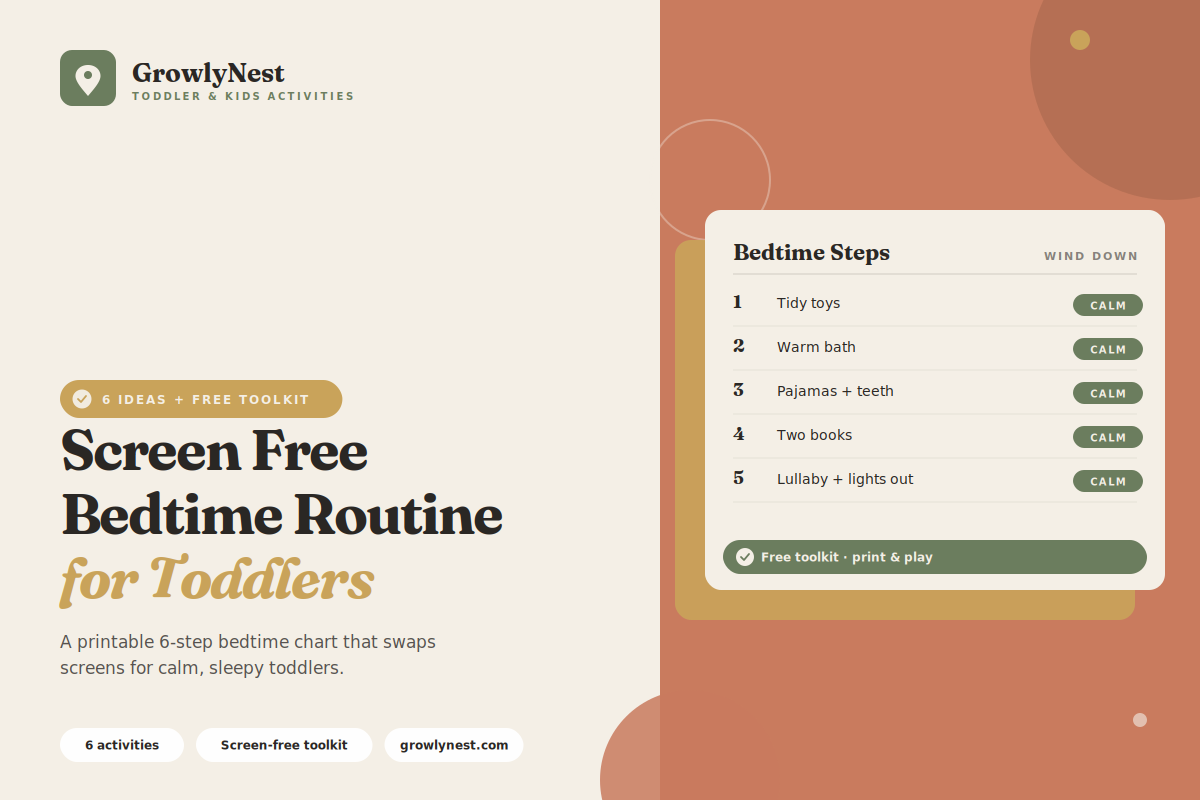
Screens before bed delay sleep and leave toddlers harder to settle and groggier the next morning. A calm, predictable screen free bedtime routine — built around a simple visual chart — replaces the tablet with activities that genuinely wind a child down. Here's the full six-step routine and how to make bedtime peaceful again.
Why screens sabotage toddler sleep
It isn't only the blue light. Tablet and TV content over-stimulates a toddler's brain at exactly the moment it needs to slow down, which pushes back the natural sleep signal and stretches out bedtime.
Toddlers settle best with predictability. A consistent six-step routine, done in the same order every night, tells the brain and body that sleep is coming. Most families see falling-asleep times drop noticeably within a week of swapping the screen for a steady routine.
Free printable download
Get the Free Screen-Free Toddler Toolkit
A parent guide on replacing screen time, 30 activity cards across 6 categories, a Quick Finder page, a weekly screen-free planner, and a bonus jar label — all free.
Download the Free Toolkit →The 6-step screen-free bedtime routine
Step 1 — Tidy a few toys
Have your toddler put away five toys together with you. This small act signals that the day is closing and play time is over.
Step 2 — Warm bath
A ten-minute warm bath is both calming and biologically useful — the body cools afterward, which helps trigger sleepiness.
Step 3 — Pajamas and teeth
Pajamas on, teeth brushed to a two-minute song. The song gives the task a clear, predictable shape with no screen needed.
Step 4 — Two books in bed
Read the same two books for a week at a time. The repetition is comforting and the predictability helps toddlers settle.
Step 5 — Lullaby or quiet humming
Thirty seconds of a soft song or hum with the lights low. A gentle, consistent audio cue that sleep is near.
Step 6 — Lights out, door cracked
A brief, calm goodnight — "I'll check on you in five minutes" — then leave. A predictable exit reduces bedtime resistance over time.
Want all of this on printable cards?
The free Screen-Free Toddler Toolkit turns these ideas into 30 ready-to-use activity cards, sorted into 6 categories, with a Quick Finder page so you can grab the right one in seconds.
Get the Free ToolkitCalming activities to swap for screens
If your toddler currently relies on a screen to wind down, ease the transition with these gentle alternatives.
07. Audio stories instead of video
Swap the bedtime show for an audio story or quiet music. It offers the same comfort with none of the stimulating light.
08. Gentle stretching
A few slow, calm stretches — reach up high, curl up small — release the day's tension without revving a toddler up.
09. Quiet "day review" chat
Talk softly about one nice thing from the day. It's connecting, calming, and a lovely way to close the day together.
10. Dim-light puzzle or lacing
A single quiet activity under soft light bridges the gap for toddlers used to a screen at this hour.
How to make a calm bedtime stick
1. Start the routine 45 minutes before sleep
Toddlers need a longer wind-down runway than you'd expect. Begin earlier than feels necessary.
2. Keep the last 90 minutes screen-free
No screens — including parent screens the child can see — in the run-up to bed. Dim the lights to reinforce the signal.
3. Keep the order identical every night
The sequence matters more than the exact clock time. Same steps, same order, every single night.
4. Use a visual bedtime chart
A picture chart lets your toddler see what comes next and feel in control, which cuts the negotiating.
Frequently asked questions
My toddler wants the tablet to fall asleep. What can replace it?
Audio-only stories or soft music offer the same soothing comfort without the stimulating light. Pair it with the same two books each night for a consistent, screen-free wind-down.
What age can I start a bedtime routine chart?
From around 18 months toddlers can engage with a picture chart; by 2.5 years most follow it well. Even babies benefit from a consistent routine, chart or not.
How long until a new bedtime routine works?
Most families notice a calmer, quicker bedtime within five to ten nights of consistency. The first few nights are the hardest — stay the course.
My toddler stalls and asks for "one more thing." Help.
Build the stalls into the routine itself — one drink, one more hug, all on the chart. When the chart accounts for them, there's nothing left to negotiate.
Is some quiet TV before bed really that bad?
Even calm content stimulates and delays sleep more than a book or audio story. Shifting screens to earlier in the day protects bedtime.
The Screen-Free Toddler Toolkit
Make screen-free days the easy default
Everything in one free download: a parent guide on replacing screen time, 30 activity cards in 6 categories, a Quick Finder page, a weekly screen-free planner, and a bonus activity-jar label.
Download the Free Toolkit →Free forever · No spam · Unsubscribe any time
From the GrowlyNest family — helping you raise calm, curious, screen-free kids.
You're getting — completely free
The Screen-Free Toddler Toolkit Bundle
Here's how to get it
It arrives in 1–2 minutes — check your inbox now.
If you don't see the "Gift File" check your Promotions or Spam folder. Drag it to your main inbox so future emails reach you.
Loading Viewer...