
Parent Guide · Whole-Family · How-To
Knowing you should cut your toddler's screen time isn't the hard part — having a ready alternative the moment you actually need one is. This guide breaks down the predictable moments parents reach for a screen and gives you a concrete screen time alternative for each, so you can reduce screen time without the daily battle.
Why screen time creeps up — and how to take it back
Most parents don't cave on screens randomly — they cave at predictable moments: the morning rush, dinner prep, car rides, weekend mornings, and the run-up to bed. When you can't think of anything else, the tablet becomes the obvious answer.
The fix isn't more willpower — it's preparation. Identify your toddler's specific screen-time triggers, plan a swap for each one, and stage the materials nearby. When the alternative is genuinely easier to reach than the screen, the habit shifts on its own.
Free printable download
Get the Free Screen-Free Toddler Toolkit
A parent guide on replacing screen time, 30 activity cards across 6 categories, a Quick Finder page, a weekly screen-free planner, and a bonus jar label — all free.
Download the Free Toolkit →The trigger moments and what to do instead
01. The morning cartoon
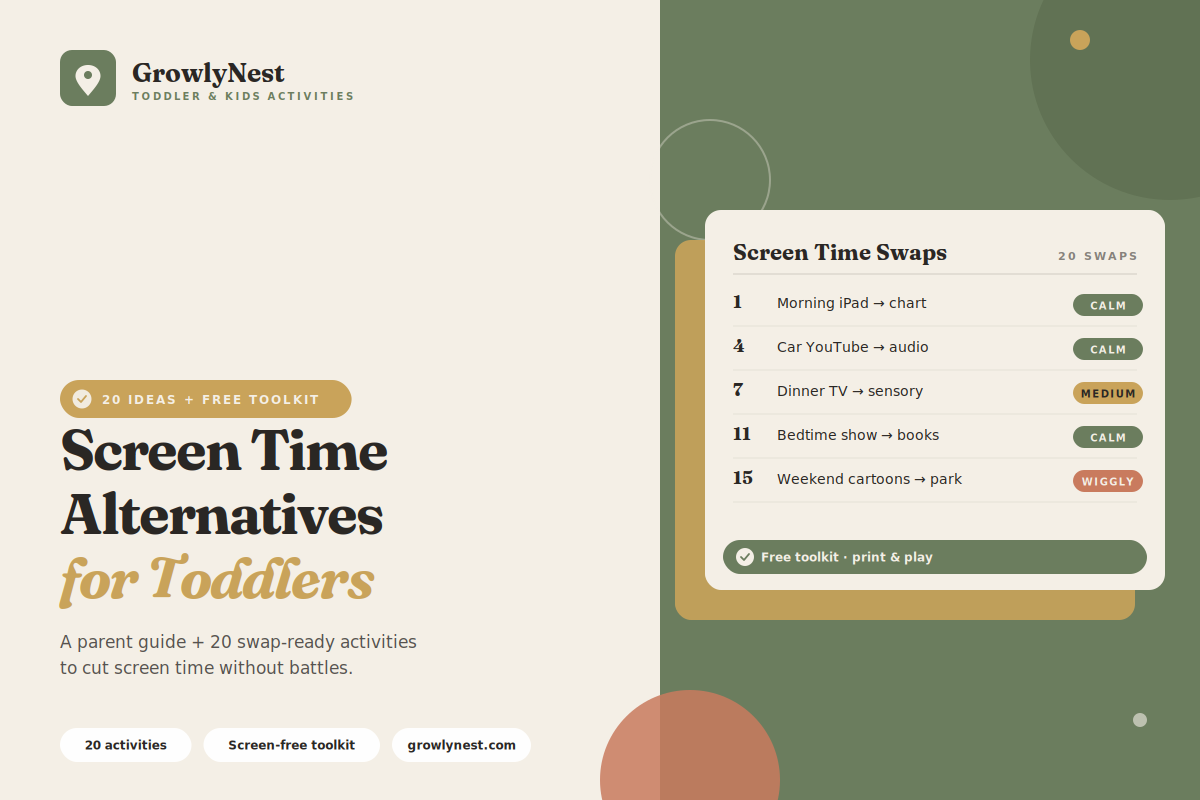
Swap it for a visual routine chart with stickers. Toddlers reach for the screen at breakfast for predictability — a chart gives them that without the wind-up.
02. Car-ride videos
Swap for audio stories plus a reusable sticker book or window crayons. They keep little hands and minds busy without a tablet.
03. Dinner-prep TV
Swap for a sensory bin or a real kitchen job at the table beside you. Being close and "helping" holds a toddler's attention.
04. The bedtime show
Swap for two books, a warm bath, and a lullaby. A calming routine settles toddlers far better than stimulating screen content.
05. Weekend-morning screens
Swap for a slow pancake breakfast and an early trip to the park. Pre-load a better default before the tablet becomes the plan.
06. Restaurant or waiting-room screens
Swap for a small bag of quiet activities — stickers, crayons, story cards. Prepared distraction beats a desperate tablet.
07. The sick-day marathon
Swap for audio stories, drawing, and quiet cuddles on the couch. A poorly toddler can rest without a screen all day.
08. "Just ten more minutes" before bed
This is the hardest swap. Two books almost always win — offer them as the consistent, non-negotiable alternative.
Want all of this on printable cards?
The free Screen-Free Toddler Toolkit turns these ideas into 30 ready-to-use activity cards, sorted into 6 categories, with a Quick Finder page so you can grab the right one in seconds.
Get the Free ToolkitYour screen-reduction plan
09. Pick your top three triggers
Don't try to fix everything at once. Choose the three moments where screens creep in most and focus there first.
10. Pre-stage every swap
Keep the replacement activity ready and within reach at the trigger spot. The easier the alternative, the more likely you'll use it.
11. Expect a short adjustment period
Plan for two or three days of pushback per trigger. By around day four, most toddlers stop asking for the screen in that moment.
12. Add the next trigger once one sticks
When a swap feels automatic, layer in the next one. Gradual change holds far better than an overnight overhaul.
How to make screen reduction stick
1. Replace, don't just remove
A screen taken away with nothing to fill the gap leads straight to a meltdown. Always have the alternative ready first.
2. Get both parents aligned
Reducing screen time works best when caregivers agree on the plan. One quick conversation prevents a lot of mixed messages.
3. Model it yourself
Toddlers copy what they see. Choosing your own phone-free moments teaches more than any rule for the kids.
4. Allow planned exceptions
Flights, long drives, and genuine emergencies are fine. The goal is reducing the everyday default, not zero tolerance.
Frequently asked questions
How quickly will I see results?
For a specific trigger, most families see a real shift within five to seven days of consistent swaps. The first few days are the hardest.
What about screens for flights or medical situations?
Those are perfectly reasonable. The goal of reducing screen time is breaking the everyday default reliance, not banning screens entirely.
My partner relies on screens to manage tantrums.
Have one calm conversation about the plan and agree on a couple of go-to swaps. Shared, consistent alternatives work far better than one parent holding the line alone.
My toddler tantrums every time I cut screen time. Help.
Expect a short adjustment period — it's normal. Acknowledge the feeling, redirect to a ready alternative, and stay consistent. It eases within a few days.
Is it really possible to have a low-screen toddler?
Yes — and it's easier than it sounds once you've replaced the predictable trigger moments. The screen stops being the automatic answer when a better one is always within reach.
The Screen-Free Toddler Toolkit
Make screen-free days the easy default
Everything in one free download: a parent guide on replacing screen time, 30 activity cards in 6 categories, a Quick Finder page, a weekly screen-free planner, and a bonus activity-jar label.
Download the Free Toolkit →Free forever · No spam · Unsubscribe any time
From the GrowlyNest family — helping you raise calm, curious, screen-free kids.
You're getting — completely free
The Screen-Free Toddler Toolkit Bundle
Here's how to get it
It arrives in 1–2 minutes — check your inbox now.
If you don't see the "Gift File" check your Promotions or Spam folder. Drag it to your main inbox so future emails reach you.
Loading Viewer...